

Content covered in this post
- What is baldness (androgenetic alopecia)?
- Why does baldness happen?
- Is baldness genetic?
- Baldness in men vs. women
- Main signs and symptoms
- Normal shedding vs. androgenetic alopecia
- Diagnosis: how doctors evaluate hair loss
- Treatments that actually work
- Minoxidil: how it works and what to expect
- Finasteride and dutasteride: benefits and risks
- Do shampoos and supplements help?
- PRP, laser therapy, and procedures: are they worth it?
- Hair transplant: when to consider it
- Myths and facts
- Quick FAQ
- Important notice (health disclaimer)
- References and further reading
What is baldness (androgenetic alopecia)?
Baldness, medically known as androgenetic alopecia, is the most common cause of progressive hair loss. It affects men and women and typically develops gradually over time.
In this condition, hair follicles undergo a process called miniaturization, meaning the hair becomes progressively thinner, shorter, and weaker until it eventually stops growing.
The result is a characteristic pattern of hair thinning:
- in men, usually a receding hairline and thinning at the crown
- in women, more diffuse thinning at the top of the scalp, often with the frontal hairline preserved
Androgenetic alopecia can start as early as adolescence or early adulthood.
Why does baldness happen?
Baldness happens mainly due to a combination of:
- genetic predisposition
- hormonal influence, especially sensitivity to DHT (dihydrotestosterone)
DHT is a hormone derived from testosterone. In people who are genetically predisposed, DHT binds to receptors in the hair follicles and gradually causes them to shrink.
📌 Important: baldness does not necessarily mean a person has “high testosterone.” It often means their hair follicles are more sensitive to hormonal effects.
Is baldness genetic?
Yes, in most cases.
Androgenetic alopecia is strongly influenced by genetics, and the risk may come from either the maternal or paternal side of the family. There is no simple rule, such as “it always comes from the mother’s side.”
Multiple genes are involved, which explains why hair loss patterns can vary widely.
Baldness in men vs. women
Although the underlying mechanism is similar, baldness presents differently depending on sex.
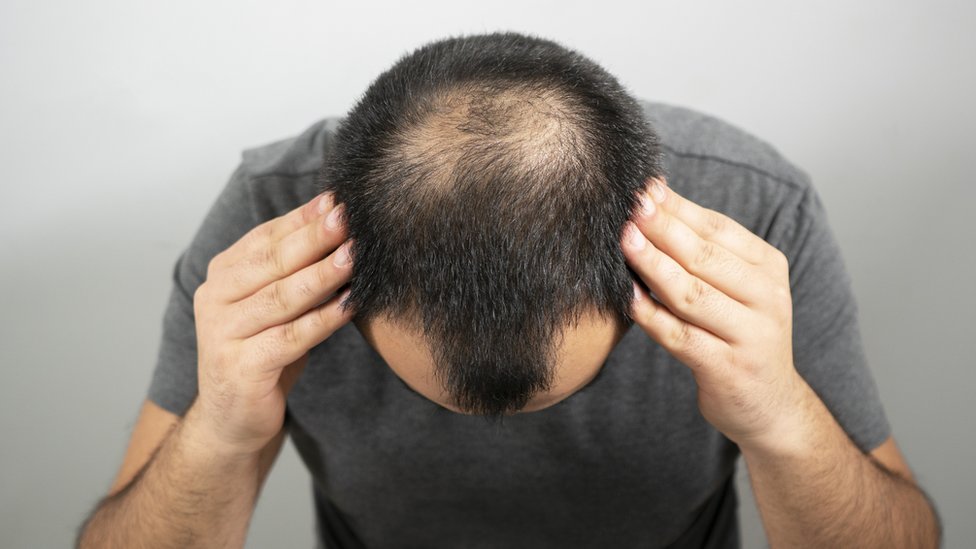
In men
- receding hairline (“temple recession”)
- thinning at the crown
- gradual development of bald patches over time
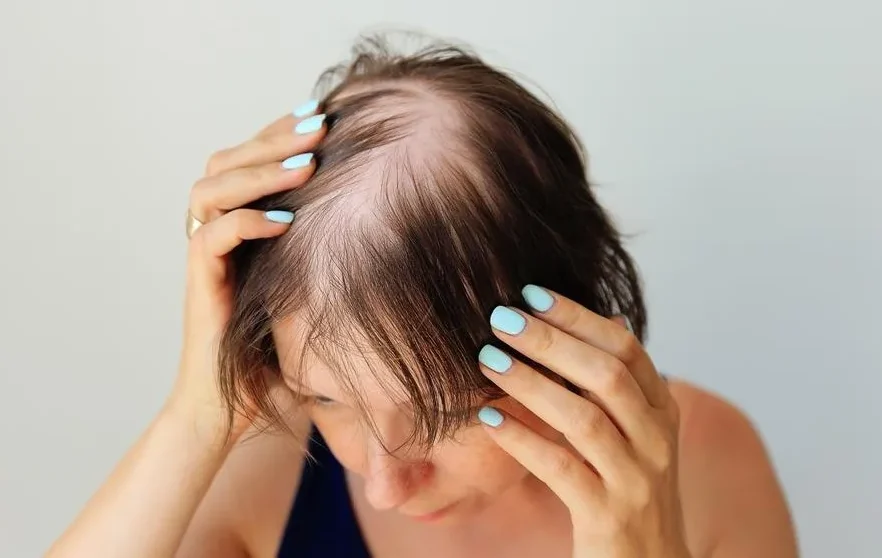
In women
- overall thinning on the top of the scalp
- widening part line
- frontal hairline is usually preserved
In women, other hormonal or medical conditions can sometimes contribute to hair loss, making evaluation especially important.
Main signs and symptoms
The most typical signs include:
- gradual thinning of hair over months or years
- reduced hair density
- increased visibility of the scalp
- widening hair part (more common in women)
- progressive recession at the temples (more common in men)
Baldness usually does not cause pain. However, itching, irritation, or scalp inflammation may indicate additional scalp conditions.
Normal shedding vs. androgenetic alopecia
It is normal to lose around 50 to 100 hairs per day, especially during washing or brushing.
However, signs that may suggest androgenetic alopecia include:
- hair thinning rather than just shedding
- progressive widening of the hair part
- a receding hairline or crown thinning
- family history of pattern hair loss
- hair becoming visibly finer over time
Sudden hair shedding after illness, stress, surgery, or pregnancy may indicate another condition (such as telogen effluvium), not classic baldness.
Diagnosis: how doctors evaluate hair loss
Diagnosis is usually made by a dermatologist through:
- clinical scalp examination
- evaluation of the thinning pattern
- dermoscopy/trichoscopy (examining follicles with magnification)
- blood tests in selected cases (iron levels, thyroid function, vitamin D, etc.)
In women, doctors may also investigate hormonal disorders such as PCOS if symptoms suggest it.
Treatments that actually work
One of the most important points about baldness treatment is:
👉 the earlier treatment begins, the better the results.
The most evidence-based treatments include:
- minoxidil
- finasteride
- dutasteride (selected cases)
- hair transplantation
These treatments do not permanently “cure” baldness, but they can slow progression and improve hair density.
Minoxidil: how it works and what to expect
Minoxidil is one of the most widely used treatments for androgenetic alopecia. It is commonly applied topically, and in some cases, low-dose oral minoxidil may be prescribed under medical supervision.
Minoxidil helps by:
- prolonging the growth phase of the hair cycle
- increasing blood flow and follicle activity
- thickening existing hairs
What to expect:
- noticeable improvement usually takes 3 to 6 months
- best results often appear after 6 to 12 months
- treatment must be continued long-term
⚠️ Some people experience temporary increased shedding during the first weeks, which is often a normal part of the process.
Finasteride and dutasteride: benefits and risks
Finasteride works by reducing the conversion of testosterone into DHT, lowering the hormone most strongly linked to follicle miniaturization.
In men, it may:
- reduce hair shedding
- slow or stop progression
- improve hair density in many cases
Dutasteride works similarly but is more potent and is usually reserved for selected cases under specialist guidance.
Possible side effects
Side effects are uncommon but may include:
- decreased libido
- erectile dysfunction
- mood changes
These risks should be discussed with a doctor before starting treatment.
⚠️ Finasteride and dutasteride are not recommended during pregnancy, and pregnant individuals should avoid handling these medications.
Do shampoos and supplements help?
Shampoos can help improve scalp conditions such as dandruff or seborrheic dermatitis, but they rarely treat androgenetic alopecia on their own.
Supplements may only help if a deficiency is present, such as:
- iron deficiency
- vitamin D deficiency
- zinc deficiency
- vitamin B12 deficiency
Hair supplements marketed as “growth boosters” may not be effective if there is no underlying deficiency.
PRP, laser therapy, and procedures: are they worth it?
Some procedures may offer additional benefit, including:
- PRP (platelet-rich plasma) injections
- low-level laser therapy
- microneedling
These may help as complementary treatments, but results vary and they should not replace the main evidence-based therapies.
Cost-benefit should be carefully considered.
Hair transplant: when to consider it
Hair transplantation can be an excellent option for more advanced hair loss, but it is important to understand:
- it does not stop future hair loss in untreated areas
- it often works best when combined with medical therapy
- success depends on the quality of the donor area
Transplantation is usually considered when hair loss is stable or well controlled.
Myths and facts
“Wearing hats causes baldness.”
Myth. Hats do not cause androgenetic alopecia.
“Baldness is always caused by high testosterone.”
Myth. It is more related to genetic sensitivity to DHT.
“Minoxidil can cause increased shedding at the beginning.”
Fact. Temporary shedding may happen early in treatment.
“If you stop treatment, hair loss may return.”
Fact. Most treatments require long-term use to maintain results.
Quick FAQ
Is baldness curable?
There is no permanent cure, but there are effective treatments to slow or improve hair loss.
Does minoxidil work for everyone?
No. It works best in early stages and in certain areas.
Is finasteride safe?
For most people, yes, but it should be used under medical guidance.
Can women develop androgenetic alopecia?
Yes. Female pattern hair loss is common and often underdiagnosed.
Does a hair transplant last forever?
It can provide long-lasting improvement, but untreated hair may continue to thin over time.
Important notice (health disclaimer)
This content is for educational purposes only and does not replace professional medical advice. Sudden or severe hair loss, patchy bald spots, scalp pain, inflammation, scaling, or associated hormonal symptoms should be evaluated by a healthcare professional for proper diagnosis and treatment.
References and further reading
American Academy of Dermatology (AAD). Androgenetic alopecia overview.
Mayo Clinic. Hair loss: causes and treatment.
National Health Service (NHS). Hair loss guidance.
Cleveland Clinic. Male-pattern baldness and female-pattern hair loss.
International Society of Hair Restoration Surgery (ISHRS). Hair loss and hair transplant information.