

What this post covers
- What ventricular tachycardia is
- Difference between common tachycardia and ventricular tachycardia
- How the heart normally works
- Why ventricular tachycardia can be dangerous
- Main symptoms
- Sustained vs. non-sustained ventricular tachycardia
- Common causes
- Who is at higher risk
- Relationship with heart attacks and heart failure
- Ventricular tachycardia in young people
- How diagnosis is made
- Most commonly used tests
- Available treatments
- Cardioversion, catheter ablation, and implantable defibrillators (ICD)
- What to do during an episode
- Possible complications
- Myths vs. facts
- Quick FAQ
- Important medical disclaimer
- References and recommended reading
What is ventricular tachycardia
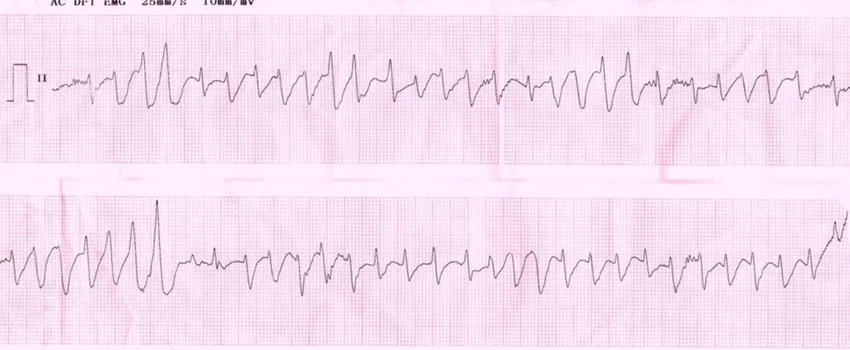
Ventricular tachycardia (VT) is a potentially serious cardiac arrhythmia that occurs when the ventricles — the lower chambers of the heart — begin beating abnormally fast.
In most cases, the heart rate exceeds:
- 100 to 120 beats per minute
- and may become significantly faster
Unlike many harmless forms of rapid heartbeat, ventricular tachycardia can severely impair the heart’s ability to pump blood effectively.
📌 In some cases, VT can progress to sudden cardiac arrest.
Difference between common tachycardia and ventricular tachycardia
The term “tachycardia” simply means a fast heart rate.
Ventricular tachycardia, however, is a specific arrhythmia that originates in the ventricles and is considered far more dangerous than common forms of increased heart rate related to:
- anxiety
- exercise
- stress
- caffeine
While many tachycardias are normal physiological responses, ventricular tachycardia is often associated with structural heart disease.
📌 Not every rapid heartbeat is dangerous, but ventricular tachycardia always requires urgent medical attention.
How the heart normally works
Under normal conditions, the heartbeat begins in the sinus node located in the atria.
Electrical impulses travel through:
- the atria
- the atrioventricular node
- the ventricles
This system keeps the heartbeat coordinated and efficient.
In ventricular tachycardia, abnormal electrical impulses originate directly in the ventricles, causing the heart to beat excessively fast and abnormally.
📌 The faster and more disorganized the rhythm becomes, the greater the risk of cardiovascular collapse.
Why ventricular tachycardia can be dangerous
When the heart beats too quickly:
- the ventricles cannot fill properly
- cardiac output decreases
- less blood reaches the brain and vital organs
This may lead to:
- dizziness
- fainting
- shock
- cardiac arrest
VT can also progress to:
- ventricular fibrillation
- sudden cardiac death
📌 Ventricular fibrillation is one of the leading causes of sudden death worldwide.
Main symptoms
Symptoms vary depending on:
- the duration of the arrhythmia
- heart rate speed
- underlying heart disease
Common symptoms include:
- intense palpitations
- sensation of a racing heart
- dizziness
- sudden weakness
- shortness of breath
- chest pain
- cold sweats
- near-fainting sensation
- fainting (syncope)
In severe cases:
- loss of consciousness
- cardiac arrest
- sudden death
📌 Some people may experience brief silent episodes detected only through cardiac testing.
Sustained vs. non-sustained ventricular tachycardia
Non-sustained ventricular tachycardia
Lasts less than 30 seconds and may stop spontaneously.
Even so, it may indicate:
- increased risk of serious arrhythmias
- underlying heart disease
Sustained ventricular tachycardia
Lasts longer than 30 seconds or requires medical intervention.
It is considered more dangerous and may cause:
- hemodynamic instability
- shock
- cardiac arrest
📌 Sustained ventricular tachycardia is a medical emergency.
Common causes
Ventricular tachycardia is usually associated with structural abnormalities of the heart.
The most common causes include:
Previous heart attack
Scar tissue left after a heart attack can disrupt normal electrical pathways.
Heart failure
A weakened heart muscle increases the risk of dangerous arrhythmias.
Cardiomyopathies
Diseases that alter the structure of the heart.
Examples include:
- dilated cardiomyopathy
- hypertrophic cardiomyopathy
- arrhythmogenic cardiomyopathy
Coronary artery disease
Reduced blood flow to the heart muscle.
Electrolyte imbalances
Abnormal levels of:
- potassium
- magnesium
- calcium
Drugs and stimulants
Especially:
- cocaine
- amphetamines
- certain medications
Genetic causes
Some inherited syndromes increase the risk of ventricular arrhythmias.
📌 In younger patients, genetic and inflammatory causes deserve careful investigation.
Who is at higher risk
Risk increases in people with:
- previous heart attack
- heart failure
- cardiomyopathy
- coronary artery disease
- reduced ejection fraction
- family history of sudden cardiac death
- stimulant drug use
📌 Not all patients experience warning symptoms before a serious event occurs.
Relationship with heart attacks and heart failure
After a heart attack, scar tissue can create abnormal electrical circuits inside the heart.
This increases the risk of:
- ventricular tachycardia
- ventricular fibrillation
- sudden cardiac death
People with heart failure are also at higher risk because of structural remodeling of the heart muscle.
📌 Many implantable defibrillators are recommended specifically to prevent sudden death in these patients.
Ventricular tachycardia in young people
Although more common in people with heart disease, VT can also occur in younger individuals.
Possible causes include:
- inherited heart diseases
- myocarditis
- stimulant drug use
- inherited electrical disorders
In athletes, fainting during exercise should always be investigated.
📌 Exercise-related fainting may be a sign of a serious arrhythmia.
How diagnosis is made
Diagnosis involves:
- medical history
- symptom evaluation
- physical examination
- cardiac testing
Doctors may investigate:
- fainting episodes
- palpitations
- family history
- known heart disease
- medication or substance use
Most commonly used tests
Electrocardiogram (ECG/EKG)
May identify the arrhythmia during an episode.
Holter monitor
Records heart rhythm continuously over 24 hours or longer.
Echocardiogram
Evaluates heart structure and function.
Cardiac MRI
Helps detect scar tissue and inflammation.
Electrophysiology study
Maps the electrical pathways of the heart.
Blood tests
May evaluate:
- electrolytes
- thyroid function
- cardiac markers
📌 In some cases, genetic testing may also be necessary.
Available treatments
Treatment depends on the cause and severity of VT.
Emergency treatment
Unstable patients may require:
- immediate electrical cardioversion
- defibrillation
- intensive care support
Medications
Treatment may include:
- amiodarone
- lidocaine
- beta blockers
- antiarrhythmic drugs
Catheter ablation
A minimally invasive procedure that destroys areas responsible for the arrhythmia.
📌 Ablation can significantly reduce recurrent episodes in selected patients.
Cardioversion, catheter ablation, and implantable defibrillators (ICD)
Electrical cardioversion
Uses a controlled electrical shock to restore normal rhythm.
Implantable cardioverter-defibrillator (ICD)
A device implanted in the chest capable of detecting and treating dangerous arrhythmias automatically.
An ICD may:
- deliver internal shocks
- interrupt life-threatening arrhythmias
- prevent sudden cardiac death
Catheter ablation
May be recommended when:
- episodes recur frequently
- medications fail to control symptoms
- patients receive multiple ICD shocks
📌 ICDs save thousands of lives every year.
What to do during an episode
Seek emergency medical care immediately if symptoms include:
- fainting
- chest pain
- severe shortness of breath
- persistent palpitations
- severe dizziness
If a person loses consciousness:
- call emergency services immediately
- begin CPR if trained to do so
📌 Rapid treatment is critical during severe arrhythmias.
Possible complications
Major complications include:
- heart failure
- cardiogenic shock
- ventricular fibrillation
- cardiac arrest
- sudden cardiac death
📌 Some complications may occur within minutes.
Myths vs. facts
“Every palpitation means ventricular tachycardia.”
Myth.
“Ventricular tachycardia can cause sudden death.”
Fact.
“Young people can also develop VT.”
Fact.
“Anxiety is the main cause of ventricular tachycardia.”
Myth. Most cases are related to underlying heart abnormalities.
“Fainting during exercise should always be investigated.”
Fact.
Quick FAQ
Is ventricular tachycardia serious?
Yes. It can be life-threatening.
Does every case cause symptoms?
No. Some episodes are silent.
Can anxiety cause ventricular tachycardia?
Anxiety can increase heart rate, but it usually does not cause true ventricular tachycardia.
Does an ICD cure the arrhythmia?
An ICD reduces the risk of sudden cardiac death, but it may not eliminate the underlying cause.
Can ventricular tachycardia come back?
Yes. Some patients experience recurrent episodes.
Important medical disclaimer
This content is for educational purposes only and does not replace professional medical advice. Severe palpitations, fainting, chest pain, shortness of breath, or episodes of loss of consciousness require immediate medical evaluation. Ventricular tachycardia can represent a life-threatening emergency and may lead to sudden cardiac death.
References and recommended reading
American Heart Association (AHA). Ventricular tachycardia and sudden cardiac arrest.
European Society of Cardiology (ESC). Guidelines for ventricular arrhythmias and prevention of sudden cardiac death.
Mayo Clinic. Ventricular tachycardia: symptoms and causes.
National Heart, Lung, and Blood Institute (NHLBI). Arrhythmias overview.
UpToDate. Sustained ventricular tachycardia in adults: clinical manifestations and diagnosis.
Heart Rhythm Society (HRS). Ventricular arrhythmias and ICD therapy.