

Topics covered in this article
- What is World Blood Donor Day?
- Why blood donation matters
- Who may need a blood transfusion
- What happens to blood after donation
- Blood types and compatibility
- Who can donate blood
- Who may need to postpone donation temporarily
- HIV, sexual orientation, and blood donation: why this topic is debated
- How to prepare for blood donation
- How the donation process works
- What to do after donating blood
- Why blood supplies need regular donors
- Platelet, plasma, and blood component donation
- Is blood donation safe?
- Myths and facts
- Quick FAQ
- Important disclaimer
- References and further reading
What is World Blood Donor Day?
World Blood Donor Day is observed every year on June 14.
The date was established to thank voluntary blood donors and raise awareness about the need for safe, sufficient, and accessible blood supplies around the world.
June 14 was chosen because it marks the birthday of Karl Landsteiner, the scientist who discovered the ABO blood group system. His work was essential for the development of modern transfusion medicine and safer blood transfusions.
World Blood Donor Day is not only symbolic. Hospitals, emergency departments, maternity units, cancer centers, transplant services, and surgical teams rely on donated blood every day.
Blood cannot be manufactured artificially in a way that replaces routine human blood donation in everyday clinical care. This makes voluntary donors essential to modern healthcare.
Why blood donation matters
Blood donation is one of the most direct ways a person can help save lives.
A single blood donation can help more than one patient because donated blood can be separated into different components.
These components include:
- Red blood cells.
- Platelets.
- Plasma.
- Cryoprecipitate.
Each component has a different medical use.
Red blood cells may be used for patients with severe anemia, major bleeding, trauma, or complex surgery. Platelets can be essential for people undergoing cancer treatment or living with certain blood disorders. Plasma may be used in selected situations involving clotting problems.
Blood donation is not only an act of generosity. It is a continuous medical need.
Who may need a blood transfusion
Many people associate blood transfusion only with severe accidents, but the need for blood is much broader.
Patients who may need blood or blood components include:
- People injured in accidents.
- Patients undergoing major surgery.
- People with gastrointestinal bleeding.
- Pregnant patients with severe bleeding complications.
- Newborns in specific medical situations.
- Patients with severe anemia.
- People receiving cancer treatment.
- Patients with blood disorders.
- People with extensive burns.
- Transplant patients.
- Patients with clotting disorders.
In many situations, transfusion helps stabilize a patient while the underlying cause is treated.
Behind every transfusion, there is often a chain of anonymous donors who made that care possible.
What happens to blood after donation
After collection, donated blood goes through several steps before it can be used.
The process generally includes:
- Secure identification of the collected unit.
- Laboratory testing.
- Separation into blood components.
- Storage under controlled conditions.
- Distribution according to clinical need.
- Compatibility testing before transfusion.
Donated blood is tested to reduce the risk of transmitting infections and to improve transfusion safety.
A donated unit is often not used as whole blood. Instead, it may be separated into different components so that each part can be used where it is most needed.
Blood donation is carefully controlled before it reaches a patient.
Blood types and compatibility
The best-known blood group systems are ABO and Rh.
In the ABO system, the main blood groups are:
- Type A.
- Type B.
- Type AB.
- Type O.
In the Rh system, blood can be:
- Rh positive.
- Rh negative.
Compatibility between donor and recipient is essential to reduce the risk of transfusion reactions.
Before a transfusion, healthcare teams perform specific tests to confirm that the blood is appropriate for the recipient.
Some blood types are less common than others, which makes regular donation especially important.
All blood types are needed. Even common blood types can become scarce when demand increases.
Who can donate blood
Blood donation eligibility criteria vary by country, blood service, and local health regulations.
In general, blood services assess whether the person is healthy and suitable to donate on the day of donation.
The screening process often considers:
- Age.
- Weight.
- General health.
- Blood pressure.
- Heart rate.
- Hemoglobin or hematocrit level.
- Medication use.
- Medical history.
- Recent surgeries.
- Recent travel.
- Recent vaccines.
- Infection risk exposures.
- Time since the last blood donation.
The donor also completes a confidential health questionnaire or interview before donation.
This step protects both the donor and the recipient.
Screening should not be seen as unnecessary bureaucracy. It is a central part of transfusion safety.
Who may need to postpone donation temporarily
Some situations do not prevent blood donation permanently, but may require temporary postponement.
Examples may include:
- Recent fever.
- Current infection.
- Recent use of certain medications.
- Recent surgery.
- Recent dental procedures.
- Recent vaccination.
- Pregnancy.
- Recent childbirth.
- Anemia.
- Recent tattoo or piercing.
- Recent travel to specific regions.
- Recent exposure to certain infections.
The required waiting period depends on the situation and local blood service rules.
Being temporarily deferred does not necessarily mean someone can never donate blood. Many restrictions are temporary.
HIV, sexual orientation, and blood donation: why this topic is debated
One of the most debated issues in blood donation involves eligibility rules related to infections that can be transmitted through blood, especially HIV.
Historically, many countries restricted blood donation from men who have sex with men, often abbreviated as MSM in public health language. These policies emerged during the HIV/AIDS epidemic, when laboratory testing was less advanced and transfusion services were trying to reduce the risk of HIV entering the blood supply.
However, this topic requires careful and respectful discussion.
HIV is not limited to one gender, sexual orientation, or identity. Anyone can acquire HIV, regardless of whether they are heterosexual, gay, bisexual, male, female, transgender, or nonbinary.
The risk of HIV transmission is more closely related to recent exposures and behaviors than to identity alone.
Relevant risk factors may include:
- Sex without condoms or other effective prevention methods.
- Multiple recent sexual partners.
- Recent sexually transmitted infections.
- Sharing needles or syringes.
- Recent exposure to blood or biological fluids.
- Sex with a partner whose HIV status is unknown.
- Recent use of post-exposure prophylaxis (PEP) after a possible exposure.
- Other recent situations that require individualized screening.
For this reason, many experts and health organizations have argued that blood donor screening should focus on individual risk assessment rather than broad restrictions based only on sexual orientation.
In recent years, several countries have revised or reconsidered older policies that broadly restricted donations from men who have sex with men. Some systems have moved toward more individualized screening questions that apply to all donors, regardless of sexual orientation.
The key challenge is balancing two important goals:
- Protecting patients who receive blood transfusions.
- Avoiding unnecessary discrimination against groups historically affected by stigma.
Blood safety depends on more than one layer of protection.
The main safeguards include:
- Confidential donor screening.
- Honest answers during the health interview.
- Laboratory testing of donated blood.
- Careful processing and tracking of blood components.
Even with modern testing, a concept called the window period remains important. The window period is the time between acquiring an infection and the moment when a test can reliably detect it.
This is why the pre-donation interview remains essential, even in countries with advanced laboratory testing.
The most medically relevant question is not simply “What is the donor’s sexual orientation?” A better public health approach asks whether there has been a recent exposure that could increase the risk of an infection transmissible by blood.
Blood donation policies should be based on current scientific evidence, transfusion safety, respect for donors, and protection of patients.
How to prepare for blood donation
A few simple steps can make blood donation safer and more comfortable.
Before donating, it is usually recommended to:
- Sleep well the night before.
- Eat an appropriate meal.
- Avoid prolonged fasting.
- Drink enough water.
- Avoid alcohol before donation, according to local guidance.
- Bring an identification document.
- Inform the team about medications you take.
- Report recent illnesses.
- Report recent travel.
- Answer the screening questions honestly.
Donating blood while fasting is generally not recommended.
A light, balanced meal before donation can help reduce the risk of dizziness or feeling unwell.
Honesty during screening is a form of care for the person who may receive the donated blood.
How the donation process works
Blood donation is usually simple and relatively quick.
The process generally includes:
- Registration.
- Health screening.
- Hemoglobin or anemia check.
- Confidential interview.
- Blood collection.
- Short rest period.
- Hydration or a snack after donation.
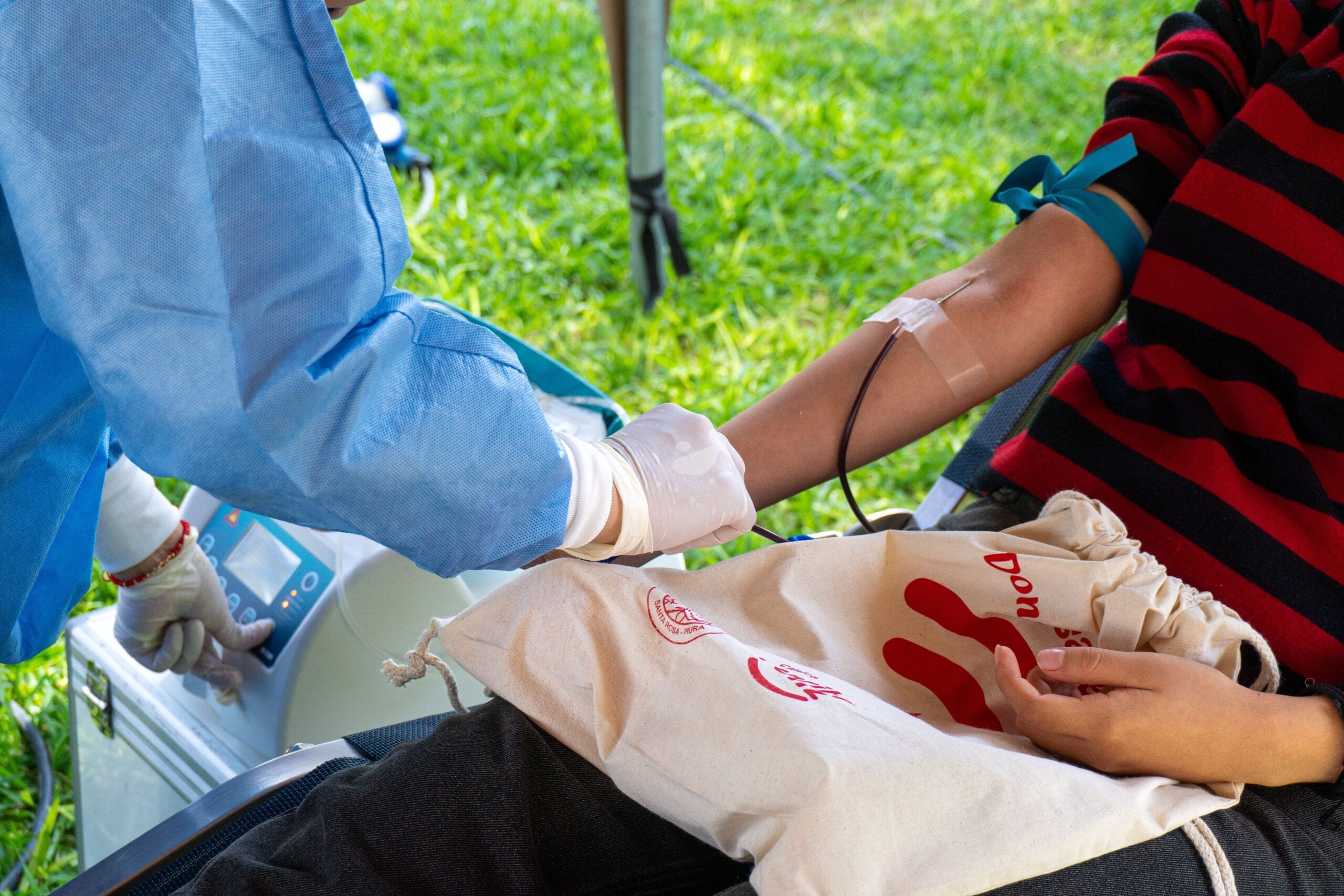
The blood collection itself usually takes only several minutes, although the full visit may take longer because of the safety steps involved.
During collection, most people feel only the brief discomfort of the needle insertion.
Most donors recover quickly and return to usual activities the same day.
The amount of blood collected is carefully planned to be safe for the donor.
What to do after donating blood
After donation, simple measures help reduce the risk of dizziness or discomfort.
Recommended steps may include:
- Rest for the time advised by the donation team.
- Drink fluids.
- Eat after donation if offered or recommended.
- Avoid strenuous exercise on the same day.
- Avoid alcohol shortly after donation.
- Keep the bandage on for the recommended period.
- Tell the staff if you feel dizzy, nauseated, or weak.
If dizziness occurs, it is important to sit or lie down and ask for help.
Mild discomfort can happen, but most people feel well after donating.
Why blood supplies need regular donors
The need for blood is constant.
Blood supplies may fall during certain times of the year, such as holidays, vacation periods, extreme weather events, or outbreaks of seasonal illness, when fewer people attend donation centers.
Some blood components also have a short shelf life.
Platelets, for example, cannot be stored for long periods and must be replenished frequently.
This is why occasional campaigns are important, but regular voluntary donation is even more valuable.
Blood banks need donors throughout the year, not only during emergencies.
Platelet, plasma, and blood component donation
In addition to whole blood donation, some services collect specific blood components through a process called apheresis.
During apheresis, blood is collected, one component is separated by a machine, and the remaining components are returned to the donor.
Apheresis may be used to collect:
- Platelets.
- Plasma.
- Red blood cells in selected situations.
Platelet donation is especially important for patients with cancer, blood disorders, transplants, and treatments that reduce the body’s ability to produce blood cells.
Not every blood center offers every type of donation. Availability depends on local resources and clinical demand.
Is blood donation safe?
Yes. Blood donation is considered safe when performed in authorized services that follow proper protocols.
The collection uses sterile, disposable, single-use materials.
This means donors do not acquire infections from donating blood.
The most common side effects are usually mild and may include:
- Dizziness.
- Temporary weakness.
- A small bruise at the needle site.
- Temporary tiredness.
Serious adverse events are uncommon.
Blood donation should be performed only in official blood centers or authorized collection services.
Myths and facts
“Donating blood makes the blood thicker or thinner.”
Myth.
“Blood donation can save lives.”
Fact.
“A person loses too much blood when donating.”
Myth.
“All blood types are important.”
Fact.
“Blood donation is only needed during major disasters.”
Myth.
“Screening protects both the donor and the recipient.”
Fact.
“HIV risk is determined only by sexual orientation.”
Myth.
“Blood safety policies should be based on science and individual risk assessment.”
Fact.
Quick FAQ
Does blood donation hurt?
Most people feel only the brief discomfort of the needle insertion.
Do I need to know my blood type before donating?
Not necessarily. The blood service performs the necessary testing.
Can I donate blood while fasting?
In most cases, fasting is not recommended. Donors are usually advised to eat appropriately before donation.
Can someone with a tattoo donate blood?
Often yes, but there may be a required waiting period after getting a tattoo. The exact rule depends on local blood service guidance.
Can people taking medication donate blood?
It depends on the medication and the condition being treated. The screening team evaluates each case.
Does donating blood cause permanent weakness?
No. Some people may feel briefly tired or lightheaded, but the body gradually replaces the donated volume.
How often can someone donate blood?
The interval depends on sex, age, donation type, hemoglobin levels, and local regulations. The blood service will provide the correct interval.
Can LGBTQ+ people donate blood?
Eligibility depends on local rules and individual risk assessment. Many policies have changed over time, and modern discussions increasingly focus on recent risk exposures rather than identity alone.
Why do blood services ask personal questions before donation?
These questions help protect patients receiving blood transfusions and also protect donors from donating when it may not be safe for them.
Important disclaimer
This content is for educational purposes only and does not replace medical advice or the official guidance of a blood donation service. Blood donation eligibility criteria vary by country, local regulations, health conditions, medications, vaccines, travel history, and individual risk factors. Before donating, contact an official blood center and answer all screening questions honestly. If you have fever, active infection, anemia, frequent dizziness, an unexplained medical condition, or recent exposure to an infection, seek professional guidance before donating.
References and further reading
World Health Organization (WHO). World Blood Donor Day and global blood safety resources.
World Health Organization (WHO). Blood safety and availability: key facts and public health guidance.
Pan American Health Organization (PAHO). Blood donation and transfusion safety.
U.S. Food and Drug Administration (FDA). Blood donor eligibility, individual risk assessment, and HIV-related guidance.
American Red Cross. Blood donation process, eligibility, and donor education.
Centers for Disease Control and Prevention (CDC). HIV basics, transmission, testing, and blood safety information.
UNAIDS. HIV, stigma, discrimination, and public health policy resources.
National Health Service (NHS Blood Donation). Blood donation guidance and donor eligibility information.
Canadian Blood Services. Blood donation eligibility and sexual behavior-based screening information.
Australian Red Cross Lifeblood. Donor eligibility and blood safety information.
European Centre for Disease Prevention and Control (ECDC). HIV testing, surveillance, and public health resources.