
Topics covered in this article
- What is acanthosis nigricans?
- Acanthosis nigricans is not dirt
- How does acanthosis nigricans appear on the skin?
- Most common locations
- Why does acanthosis nigricans happen?
- Connection with insulin resistance
- Acanthosis nigricans, prediabetes, and type 2 diabetes
- Connection with obesity and metabolic syndrome
- Connection with polycystic ovary syndrome
- Acanthosis nigricans in children and teenagers
- Other possible causes
- Can acanthosis nigricans be a sign of cancer?
- Differences between acanthosis nigricans and other dark skin patches
- Diagnosis
- Which tests may be needed?
- Treatment of acanthosis nigricans
- Treating the cause is the most important step
- Treatments to improve skin appearance
- Daily skin care
- When to seek medical care
- Myths and facts
- Quick FAQ
- Important disclaimer
- References and further reading
What is acanthosis nigricans?
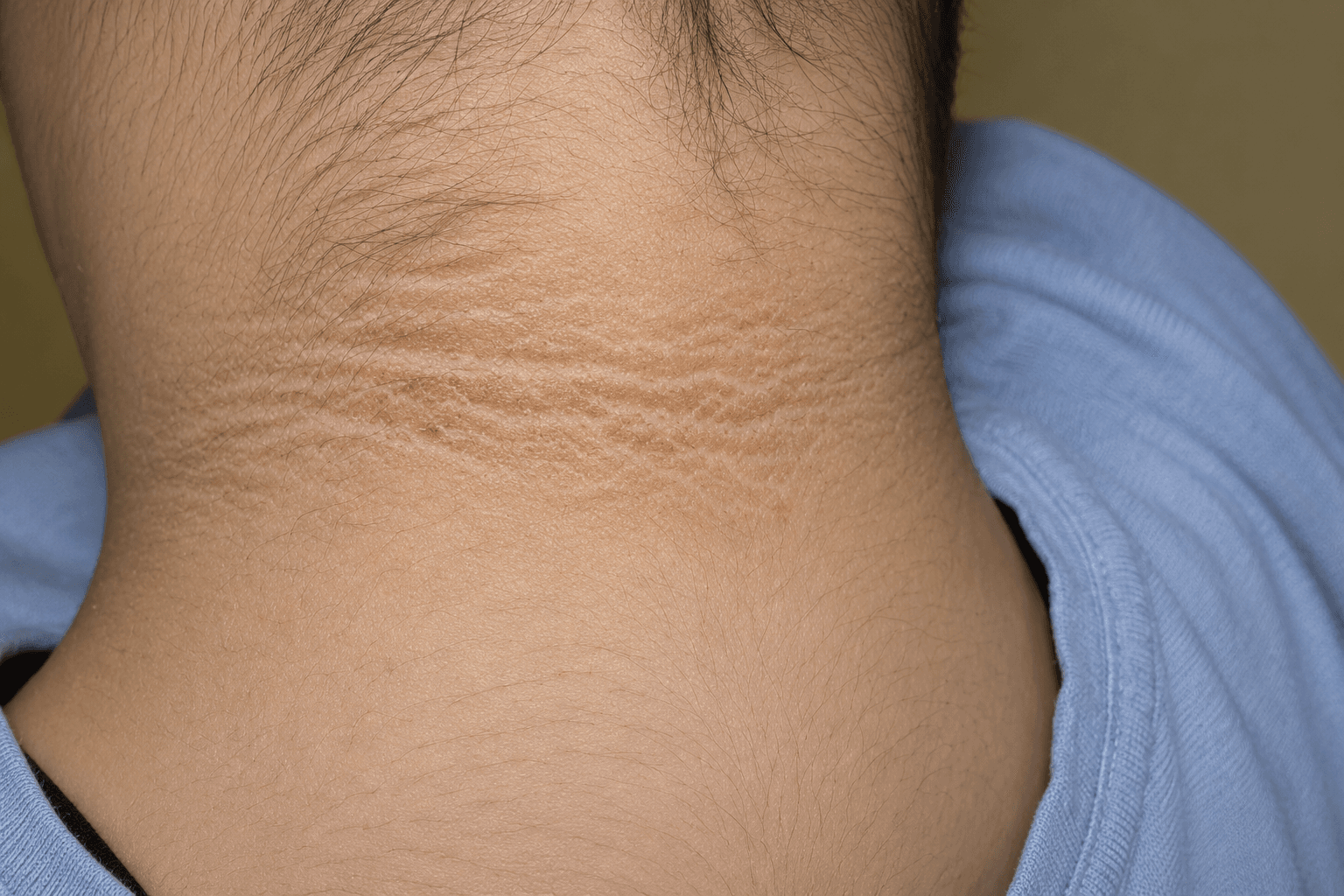
Acanthosis nigricans is a skin change characterized by dark, thickened, velvety areas of skin.
It most often appears in skin folds, such as the neck, armpits, and groin.
Many people first notice a dark patch on the neck, as if the skin were “dirty,” stained, or thicker than usual.
Despite this appearance, acanthosis nigricans is not caused by dirt.
In most cases, it is related to metabolic changes, especially insulin resistance.
Insulin resistance happens when the body needs to produce more insulin to keep blood sugar under control.
This excess insulin can stimulate skin cells and contribute to thickening and darkening in certain areas.
Important: acanthosis nigricans is not only a cosmetic concern. In many cases, it is a visible sign that the metabolism should be evaluated.
Acanthosis nigricans is not dirt
One of the biggest problems with acanthosis nigricans is stigma.
Many people, including children and teenagers, are told that the dark patch on the neck is caused by poor hygiene, dirt, or personal neglect.
This is incorrect.
Acanthosis nigricans does not come off with soap, scrubbing, or rough sponges because it is not accumulated dirt.
Scrubbing the skin aggressively can cause irritation, burning, wounds, post-inflammatory darkening, and worsening of the appearance.
It is common for people to try to remove the patch with:
- Alcohol.
- Lemon.
- Baking soda.
- Intense exfoliation.
- Rough sponges.
- Homemade skin-lightening recipes.
These practices can injure the skin and do not treat the underlying cause.
Important: acanthosis nigricans should be seen as a clinical sign, not as poor hygiene.
How does acanthosis nigricans appear on the skin?
Acanthosis nigricans usually appears as a darkened and thickened area of skin.
The skin may look:
- Brown, grayish, or blackened.
- Velvety.
- Thicker than the surrounding skin.
- Rough in texture.
- More lined or creased.
- Slightly raised.
It usually does not cause pain.
In some cases, there may be mild itching, sensitivity, odor from sweat buildup in skin folds, or irritation from friction.
The darkening may develop gradually and increase over time.
In other people, the change may be noticed more quickly, especially after weight gain, worsening insulin resistance, or hormonal changes.
The intensity varies widely.
Some people have a subtle patch on the neck.
Others have more extensive areas in several skin folds.
Most common locations
Acanthosis nigricans most often appears in areas of skin folds and friction.
Common locations include:
- Back of the neck.
- Sides of the neck.
- Armpits.
- Groin.
- Inner thighs.
- Under the breasts.
- Abdominal folds.
- Elbows.
- Knees.
- Around the belly button.
- Knuckles in some cases.
The neck is one of the most noticeable locations because it is visible.
In the armpits and groin, the change may be confused with shaving irritation, friction, deodorant reaction, fungal infection, or allergy.
In more extensive cases, it can affect mucous membranes, lips, mouth, palms, or soles, especially in rare and more concerning forms.
Why does acanthosis nigricans happen?
Acanthosis nigricans happens when certain stimuli cause the skin to thicken and darken.
The most common mechanism involves excess insulin in the blood.
When the body develops insulin resistance, the pancreas needs to produce more insulin to keep blood glucose at appropriate levels.
This excess insulin can stimulate receptors in skin cells, promoting growth and thickening of the epidermis.
As a result, dark and velvety areas appear.
However, insulin resistance is not the only possible cause.
Acanthosis nigricans may also be related to:
- Obesity.
- Prediabetes.
- Type 2 diabetes.
- Metabolic syndrome.
- Polycystic ovary syndrome.
- Certain medications.
- Hormonal changes.
- Familial or genetic forms.
- Less common endocrine diseases.
- Cancer in rare cases, especially when it appears abruptly in older adults.
Important: most cases are related to benign metabolic conditions, but the cause should be evaluated in the context of each person.
Connection with insulin resistance
Insulin resistance is one of the main associations of acanthosis nigricans.
Insulin is a hormone that helps glucose enter cells so it can be used as energy.
When cells respond less effectively to insulin, the body tries to compensate by producing more of it.
This state is called hyperinsulinemia.
Hyperinsulinemia may exist even before blood glucose becomes elevated on routine tests.
For this reason, a person can have acanthosis nigricans and insulin resistance even if fasting glucose is still normal.
Signs that may appear together with insulin resistance include:
- Weight gain, especially around the abdomen.
- Increased hunger in some cases.
- Sleepiness after meals very rich in carbohydrates.
- High triglycerides.
- Low HDL cholesterol.
- High blood pressure.
- Fatty liver disease.
- Irregular menstrual cycles in some women.
Acanthosis nigricans can be an opportunity to investigate metabolism before type 2 diabetes develops.
Acanthosis nigricans, prediabetes, and type 2 diabetes
Acanthosis nigricans can be associated with prediabetes and type 2 diabetes.
This does not mean that everyone with acanthosis nigricans already has diabetes.
It means that evaluation is worthwhile.
In many cases, the skin change appears at an earlier stage, when the body already has insulin resistance but is still trying to keep glucose controlled.
Over time, if insulin resistance worsens and the pancreas can no longer compensate, blood glucose may rise.
For this reason, the presence of acanthosis nigricans may indicate the need to evaluate:
- Fasting glucose.
- Hemoglobin A1c.
- Lipid profile.
- Blood pressure.
- Weight and waist circumference.
- Family history of diabetes.
The goal is not to scare people.
The goal is to identify metabolic risk and act early.
Lifestyle changes, weight loss when indicated, physical activity, and medical treatment when needed can improve metabolic health and, in some cases, gradually reduce acanthosis nigricans.
Connection with obesity and metabolic syndrome
Acanthosis nigricans is more common in people with overweight or obesity, especially when insulin resistance is present.
Excess adipose tissue, particularly around the abdomen, can increase metabolic inflammation and make insulin action more difficult.
This can contribute to the development of acanthosis nigricans.
Metabolic syndrome is a group of factors that increase the risk of cardiovascular disease and type 2 diabetes.
It may involve:
- Increased waist circumference.
- High blood pressure.
- High triglycerides.
- Low HDL cholesterol.
- Elevated blood glucose.
- Insulin resistance.
Acanthosis nigricans is not a required criterion for metabolic syndrome, but it can be a visible clue that this evaluation is important.
Important: discussions about weight should be handled with care. Acanthosis nigricans should not be used to shame or blame a person. It should be used as a sign for care and prevention.
Connection with polycystic ovary syndrome
Polycystic ovary syndrome, known as PCOS, can be associated with insulin resistance.
For this reason, some people with PCOS also develop acanthosis nigricans.
PCOS may cause signs such as:
- Irregular menstrual cycles.
- Increased hair growth on areas such as the face, chest, or abdomen.
- Persistent acne.
- Increased oiliness.
- Difficulty getting pregnant in some cases.
- Weight gain or greater difficulty losing weight in some people.
- Insulin resistance.
When someone has acanthosis nigricans together with menstrual irregularity, adult acne, or increased hair growth, it may be important to investigate PCOS and related metabolic changes.
Treatment may involve lifestyle changes, gynecological care, hormonal evaluation, and management of insulin resistance when indicated.
Acanthosis nigricans in children and teenagers
Acanthosis nigricans can appear in children and teenagers.
At this age, it often draws attention as darkening on the neck.
Unfortunately, many children are accused of not washing properly, when the patch may actually be related to insulin resistance.
Evaluation is especially important when a child or teenager has:
- Overweight or obesity.
- Family history of type 2 diabetes.
- Rapid weight gain.
- Sedentary lifestyle.
- A diet very high in ultra-processed foods and sugary drinks.
- High blood pressure.
- Abnormal cholesterol or triglycerides.
- Early puberty or hormonal changes in some cases.
The presence of acanthosis nigricans in young people can be an opportunity to prevent future health problems.
The focus should be health, not blame.
Nutrition guidance, physical activity, adequate sleep, reducing sugary drinks, and family-based support can make a difference.
Other possible causes
Although insulin resistance is the most common cause, acanthosis nigricans can have other origins.
Medications
Some medications may be associated with acanthosis nigricans-like changes in certain people.
Examples described include:
- Systemic corticosteroids.
- High-dose niacin.
- Growth hormone.
- Some hormonal contraceptives in specific contexts.
- Medications that influence insulin or metabolism in some cases.
This does not mean that these medications always cause acanthosis.
It also does not mean they should be stopped without guidance.
Any change should be discussed with the healthcare professional responsible for the treatment.
Familial or genetic forms
Some people have acanthosis nigricans because of familial or genetic predisposition.
In these cases, the skin change may appear early and may not always be linked to diabetes or obesity.
Even so, clinical evaluation helps distinguish possible causes.
Endocrine diseases
Some hormonal diseases may be associated with acanthosis nigricans or insulin resistance.
Examples include conditions related to excess cortisol, thyroid abnormalities in some contexts, growth disorders, and other less common endocrine conditions.
The investigation depends on the person’s history, physical examination, and associated symptoms.
Can acanthosis nigricans be a sign of cancer?
Most of the time, acanthosis nigricans is not a sign of cancer.
The most common cause is insulin resistance associated with metabolic factors.
However, there is a rare form called malignant acanthosis nigricans.
It may be associated with internal cancers, especially gastrointestinal tumors such as stomach cancer, although other tumors may also be involved.
This form is uncommon, but it should be considered in specific situations.
Signs that increase concern include:
- Sudden onset in an older adult.
- Rapid progression.
- Extensive and intense acanthosis.
- Involvement of mucous membranes, mouth, or lips.
- Thickened changes on the palms known as “tripe palms.”
- Unexplained weight loss.
- Persistent loss of appetite.
- Persistent abdominal pain.
- Vomiting, blood in the stool, or anemia without a clear cause.
- Intense itching or very rapid onset without clear metabolic risk factors.
Important: this type is rare. Even so, acanthosis nigricans with rapid onset in an older adult should be evaluated carefully.
Differences between acanthosis nigricans and other dark skin patches
Acanthosis nigricans can be confused with other skin changes.
Dirt or stained skin
Acanthosis does not come off with bathing because it is not dirt.
The skin is thickened and pigmented.
Scrubbing too much can make it worse.
Melasma
Melasma causes brown patches, mainly on the face, such as the forehead, cheeks, and upper lip.
It is strongly related to sun exposure, hormones, and predisposition.
It usually does not cause thick, velvety skin in body folds.
Fungal infection
Some fungal infections can cause patches, scaling, and itching.
Acanthosis usually has a thick, velvety texture and appears in skin folds.
When there is significant scaling, intense itching, or lesions with active borders, fungal infection may be considered in the differential diagnosis.
Friction-related hyperpigmentation
Repeated friction can darken the skin, especially on the thighs, armpits, and groin.
In some cases, friction and acanthosis nigricans coexist.
The presence of velvety thickening and association with insulin resistance favors acanthosis nigricans.
Dermatitis or allergy
Dermatitis can cause redness, itching, scaling, and later residual darkening.
Acanthosis is usually more chronic, thickened, and symmetrical in skin folds.
Terra firma-forme dermatosis
This condition causes plaques that look like adherent dirt and may come off with rubbing using isopropyl alcohol in some cases.
It can be confused with acanthosis nigricans.
Dermatological evaluation helps distinguish the two.
Addison disease
Addison disease can cause diffuse darkening of the skin and mucous membranes, along with symptoms such as fatigue, weight loss, dizziness, low blood pressure, and salt craving.
It is a different condition and requires specific investigation when suspected.
Important: dark patches on the skin can have many causes. Pattern, texture, location, and associated symptoms help guide the diagnosis.
Diagnosis
The diagnosis of acanthosis nigricans is usually clinical.
This means that a healthcare professional evaluates the appearance of the skin, location of the patches, texture, evolution, and associated factors.
During the consultation, the following may be assessed:
- When the patches began.
- Whether they are increasing.
- Whether there has been recent weight gain.
- Family history of diabetes.
- Excessive thirst or increased urination.
- Menstrual changes.
- Acne, increased hair growth, or signs of PCOS.
- Current medications.
- Presence of patches in several skin folds.
- General symptoms, such as weight loss or abdominal pain.
In most cases, skin biopsy is not necessary.
Biopsy may be considered when the diagnosis is uncertain or when the presentation is atypical.
The main point is usually to investigate the cause behind the acanthosis.
Which tests may be needed?
Tests depend on age, weight, family history, symptoms, and clinical suspicion.
In many cases, metabolic evaluation is the most important step.
Tests that may be requested include:
- Fasting glucose.
- Hemoglobin A1c.
- Lipid profile, including cholesterol and triglycerides.
- Liver function tests, especially when fatty liver disease is suspected.
- Blood pressure and body measurements.
- Fasting insulin in selected situations.
- Hormonal tests when PCOS or another endocrine condition is suspected.
- Additional tests if there are signs of internal disease or an atypical presentation.
Not every test is necessary for everyone.
The clinician decides based on the clinical picture.
In children and teenagers, evaluation should consider growth, puberty, family history, diet, physical activity, and metabolic risk.
Treatment of acanthosis nigricans
Treatment depends on the cause.
The most common mistake is trying to treat only the dark patch without investigating why the darkening is happening.
Lightening creams, exfoliants, and acids may improve appearance in some cases, but if insulin resistance continues, acanthosis nigricans tends to persist or return.
For this reason, treatment should have two goals:
- Treat the underlying cause or associated factor.
- Improve skin texture and appearance when necessary.
Important: improvement is usually gradual. The skin may take months to lighten, even when metabolism improves.
Treating the cause is the most important step
When acanthosis is linked to insulin resistance, the focus is improving metabolic health.
This may include:
- Regular physical activity.
- Reducing sugary drinks.
- Reducing ultra-processed foods.
- Increasing fiber-rich foods.
- Improving sleep quality.
- Weight loss when indicated and possible.
- Treatment of prediabetes or diabetes.
- Treatment of polycystic ovary syndrome when present.
- Control of blood pressure, cholesterol, and triglycerides.
Medications may be indicated in some situations.
For example, metformin may be used in patients with insulin resistance, prediabetes, type 2 diabetes, or PCOS when medically appropriate.
Other treatments may be needed depending on the metabolic condition.
If acanthosis is related to a medication, the healthcare professional may consider alternatives.
The medication should not be stopped without guidance.
If malignant acanthosis nigricans is suspected, investigation should be directed toward looking for internal disease.
Treatments to improve skin appearance
Dermatological treatments may help reduce skin thickening, texture, and darkening.
Possible options include:
- Moisturizers with appropriate concentrations of urea.
- Lactic acid.
- Salicylic acid.
- Topical retinoids in selected cases.
- Glycolic acid in specific situations.
- Dermatological procedures, such as chemical peels, in some cases.
- Laser in selected situations.
These treatments should be used carefully, especially in skin folds, because the skin can become irritated easily.
Irritation can worsen darkening, particularly in skin more prone to hyperpigmentation.
Strong lightening agents, homemade acids, and unregulated mixtures can cause burns and dark marks.
Important: treating the skin without treating the metabolic cause usually leads to limited results.
Daily skin care
Some daily measures can help prevent irritation and worsening appearance.
- Do not scrub the skin aggressively.
- Avoid rough sponges on darkened areas.
- Do not use lemon, baking soda, or home remedies.
- Use gentle soaps.
- Keep skin folds dry when possible.
- Avoid very tight clothing that increases friction.
- Moisturize the skin if there is dryness or roughness.
- Use sunscreen on exposed areas, such as the neck.
- Avoid aggressive hair removal when there is irritation.
- Seek guidance before using acids or lightening creams.
Daily care is important, but it should be gentle.
Skin affected by acanthosis is already thickened and pigmented, and repeated irritation can cause more inflammation.
When to seek medical care
Seek medical evaluation if you notice dark, thick, or velvety patches on the neck, armpits, groin, or other skin folds.
Evaluation is especially important when there is:
- Progressive skin darkening.
- Neck patches that do not come off with normal hygiene.
- Overweight or obesity.
- Family history of type 2 diabetes.
- Excessive thirst or frequent urination.
- Recent weight gain.
- Irregular menstrual cycles.
- Adult acne or increased hair growth in women.
- High blood pressure.
- High triglycerides.
- Fatty liver disease.
- Patches that appear rapidly in an older adult.
- Unexplained weight loss.
- Involvement of the mouth, lips, or palms.
A dermatologist can confirm whether the skin change is compatible with acanthosis nigricans.
An endocrinologist, primary care clinician, or pediatrician can help investigate metabolic causes, depending on the case.
Important: the earlier insulin resistance is identified, the greater the chance of preventing type 2 diabetes and other metabolic complications.
Myths and facts
“Acanthosis nigricans can make the neck look dark.”
Fact.
“Acanthosis nigricans is dirt.”
Myth.
“Scrubbing hard solves it.”
Myth.
“The condition may be linked to insulin resistance.”
Fact.
“Everyone with acanthosis already has diabetes.”
Myth.
“Acanthosis can appear in children and teenagers.”
Fact.
“The patch may improve when the metabolic cause is treated.”
Fact.
“Lightening cream alone always solves it.”
Myth.
“In rare cases, sudden onset in older adults may require cancer investigation.”
Fact.
“The condition is contagious.”
Myth.
Quick FAQ
What is acanthosis nigricans?
It is a skin change that causes dark, thick, velvety areas, mainly on the neck, armpits, groin, and other skin folds.
Is acanthosis nigricans dirt?
No. It is not caused by dirt and does not come off with bathing or scrubbing.
Why does it appear on the neck?
The neck is a common area of folds and friction, and it can respond to metabolic signals, especially excess insulin.
Does acanthosis nigricans mean diabetes?
Not necessarily. But it can indicate insulin resistance and a higher risk of prediabetes or type 2 diabetes.
Can children have acanthosis nigricans?
Yes. In children and teenagers, it can be an important sign of metabolic risk, especially when there is overweight or family history of diabetes.
Does acanthosis nigricans itch?
It usually does not itch much, but irritation, friction, sweating, or sensitivity may occur in some areas.
Is there a cure?
It depends on the cause. When it is linked to insulin resistance, it may improve with metabolic control, weight loss when indicated, and appropriate treatment.
Which test detects it?
The skin diagnosis is usually clinical. Blood tests, such as fasting glucose, hemoglobin A1c, and lipid profile, can help investigate metabolic causes.
Can I use a lightening cream?
Lightening agents or acids may help in some cases, but they should be used with guidance. The most important step is treating the underlying cause.
Do homemade acids or exfoliation solve it?
No. Home remedies can irritate, burn, and worsen dark patches.
Can acanthosis nigricans be cancer?
Most of the time, no. However, rapid and extensive onset in an older adult, especially with weight loss or mucous membrane involvement, requires evaluation.
Which doctor should I see?
A dermatologist, primary care clinician, endocrinologist, or pediatrician can evaluate it. Care often involves both skin and metabolism.
Important disclaimer
This content is for educational purposes only and does not replace professional medical evaluation. Dark, thick, or velvety patches on the neck, armpits, groin, or other skin folds may indicate acanthosis nigricans and should be evaluated, especially when there is overweight, family history of diabetes, menstrual irregularity, signs of insulin resistance, or progressive worsening. Seek care promptly if the patches appear rapidly in an older adult, are very extensive, involve the mouth or mucous membranes, or are accompanied by unexplained weight loss, abdominal pain, anemia, loss of appetite, or other general symptoms. Do not use home remedies, strong acids, or lightening creams without professional guidance.
References and further reading
- American Academy of Dermatology (AAD). Acanthosis nigricans: overview, causes, and treatment.
- DermNet NZ. Acanthosis nigricans.
- British Association of Dermatologists. Acanthosis nigricans patient information.
- Merck Manual Professional Version. Acanthosis nigricans.
- Cleveland Clinic. Acanthosis nigricans: symptoms, causes, and treatment.
- Mayo Clinic. Acanthosis nigricans: symptoms and causes.
- StatPearls. Acanthosis Nigricans.
- American Diabetes Association. Standards of care and risk factors for type 2 diabetes.
- Endocrine Society. Clinical information on insulin resistance and polycystic ovary syndrome.
- Journal of the American Academy of Dermatology. Reviews on acanthosis nigricans, insulin resistance, and metabolic associations.