
Topics covered in this article
- What is hidradenitis suppurativa?
- Hidradenitis suppurativa is not poor hygiene
- Why does hidradenitis suppurativa happen?
- Where does it usually appear?
- Symptoms of hidradenitis suppurativa
- How does the disease progress?
- Hurley stages
- Risk factors and associated factors
- Triggers and factors that may worsen flares
- Differences between hidradenitis, boils, ingrown hairs, acne, and swollen lymph nodes
- Diagnosis
- When may tests be needed?
- Treatment of hidradenitis suppurativa
- Topical treatments
- Oral antibiotics
- Hormonal treatment
- Biologic medications
- Procedures and surgery
- Pain control and wound dressings
- Daily care
- Diet, weight, and smoking
- Hidradenitis suppurativa during pregnancy
- Emotional impact and quality of life
- Possible complications
- When to seek medical care
- Myths and facts
- Quick FAQ
- Important disclaimer
- References and further reading
What is hidradenitis suppurativa?
Hidradenitis suppurativa is a chronic inflammatory skin disease.
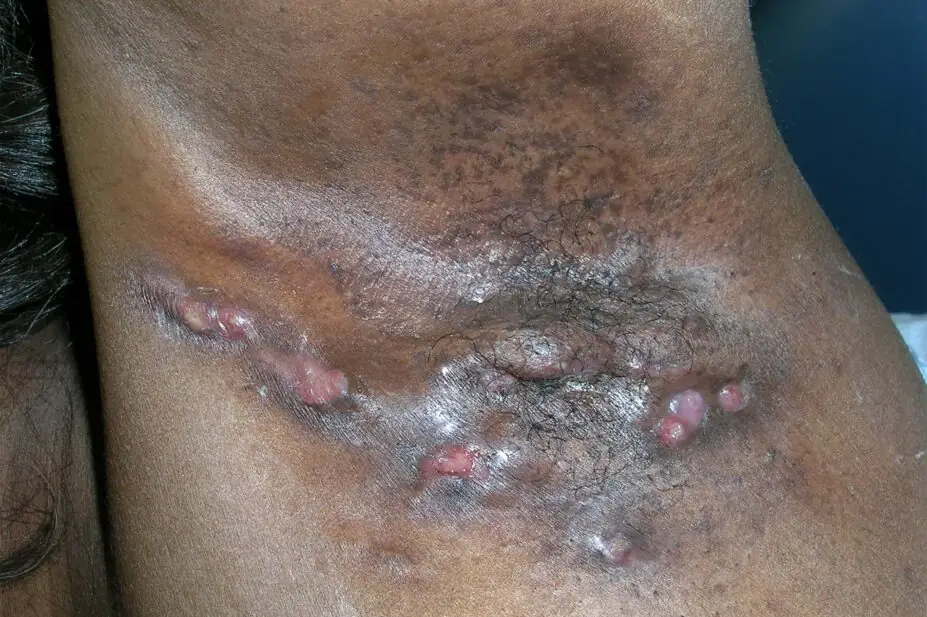
It causes painful nodules, abscesses, drainage, scars, and, in some cases, tunnels under the skin called sinus tracts.
The lesions usually appear in areas with skin folds, friction, and hair follicles, such as the armpits, groin, buttocks, inner thighs, and under the breasts.
Although it is often mistaken for repeated boils, ingrown hairs, or acne, hidradenitis suppurativa has its own pattern.
It often returns in the same area or nearby areas, causing pain, inflammation, and significant impact on quality of life.
The disease can range from mild forms, with a few occasional nodules, to severe forms with multiple abscesses, extensive scarring, and chronic drainage.
Important: hidradenitis suppurativa is not simply a skin infection. It is a chronic inflammatory disease that needs proper diagnosis and management.
Hidradenitis suppurativa is not poor hygiene
One of the most harmful myths about hidradenitis suppurativa is the idea that it happens because of poor hygiene.
This is false.
Hidradenitis suppurativa is not caused by dirt, lack of bathing, or personal neglect.
The disease involves inflammation of hair follicles, individual predisposition, immune factors, hormonal influence, genetics, and environmental factors.
Although bacteria may contribute to secondary infections or worsen some lesions, they do not explain the whole disease.
For this reason, washing the skin many times a day, scrubbing aggressively, or using harsh products usually does not solve the problem and may worsen irritation, pain, and inflammation.
Important: people with hidradenitis suppurativa often experience shame, guilt, and stigma. The disease is not the patient’s fault.
Why does hidradenitis suppurativa happen?
The exact cause of hidradenitis suppurativa is not completely understood.
The process appears to begin with blockage and inflammation of hair follicles.
Over time, the follicle can rupture inside the skin, releasing material that triggers an intense inflammatory response.
This inflammation can lead to:
- Painful nodules.
- Abscesses.
- Channels or tunnels under the skin.
- Recurrent drainage.
- Scarring.
Several factors may contribute to the development of the disease:
- Genetic predisposition.
- Changes in the immune response of the skin.
- Chronic inflammation around hair follicles.
- Hormonal influence.
- Friction in skin folds.
- Smoking.
- Overweight or obesity in some patients.
Hidradenitis suppurativa is not contagious.
It does not spread through touch, kissing, sex, towels, clothing, or living with someone.
Where does it usually appear?
Hidradenitis suppurativa mainly appears in areas with skin folds, friction, and hair follicles.
Common locations include:
- Armpits.
- Groin.
- External genital region.
- Inner thighs.
- Buttocks.
- Cleft between the buttocks.
- Under the breasts.
- Around the nipples.
- Lower abdomen.
- Perianal area.
Not every patient has lesions in all of these areas.
Some people have only armpit involvement.
Others have lesions in the groin, buttocks, genital area, or under the breasts.
The location can strongly affect discomfort, mobility, self-esteem, sexual life, and work routine.
Symptoms of hidradenitis suppurativa
Symptoms vary depending on disease severity and stage.
The most common symptoms include:
- Painful lumps under the skin.
- Inflamed nodules.
- Abscesses.
- Drainage of pus or fluid with odor.
- Pain when walking, sitting, or moving the arm.
- Redness.
- Local warmth.
- Itching or burning before a flare.
- Pressure sensation in the skin.
- Scars.
- Dark marks after inflammation.
- Tunnels under the skin.
- Lesions that repeatedly return in the same area.
Some people notice pain, burning, or discomfort before a nodule appears.
During more intense flares, pain can make simple activities difficult, such as using deodorant, wearing tight clothing, walking, sitting, or raising an arm.
Drainage and odor can cause embarrassment, even when the person maintains good hygiene.
How does the disease progress?
Hidradenitis suppurativa usually progresses in flares.
This means that lesions may improve for a period and then return.
At first, some people have only one painful nodule from time to time.
Over time, if inflammation repeats, scars and tunnels under the skin may develop.
These tunnels can connect different inflamed areas and drain fluid repeatedly.
In more advanced cases, the skin may become firm, irregular, painful, and heavily scarred.
Early diagnosis matters because treatment can reduce inflammation, control flares, and help prevent progression.
Important: repeatedly waiting for lesions to “burst on their own” may increase the risk of permanent scars and tunnels.
Hurley stages
A common way to classify hidradenitis suppurativa is the Hurley staging system.
It helps estimate severity and guide treatment.
Hurley stage I
There are isolated abscesses or nodules, without tunnels and without extensive scarring.
Flares may be painful, but the skin does not yet have major structural changes.
Hurley stage II
There are recurrent abscesses, scars, and tunnels in some areas.
Lesions may appear in separate locations, with periods of improvement and worsening.
Hurley stage III
There is more extensive involvement, with multiple interconnected tunnels, recurrent abscesses, significant scarring, and chronic drainage.
This stage can cause intense pain, functional limitation, and major emotional impact.
Important: the Hurley system does not replace individual assessment. Pain, location, flare frequency, and impact on daily life are also essential.
Risk factors and associated factors
Hidradenitis suppurativa can affect anyone, but some factors are associated with higher risk or more severe disease.
These include:
- Family history of hidradenitis suppurativa.
- Smoking.
- Overweight or obesity.
- Frequent friction in skin folds.
- Hormonal fluctuations.
- Female sex in some populations.
- Onset after puberty.
- Polycystic ovary syndrome in some people.
- Severe acne in some cases.
- Inflammatory bowel disease in some patients.
- Metabolic syndrome.
Having these factors does not mean that a person will necessarily develop hidradenitis.
It is also possible to have the disease without all of these factors.
The key is recognizing recurrence patterns and seeking evaluation.
Triggers and factors that may worsen flares
Some factors can worsen flares in people who are predisposed.
Triggers vary from patient to patient.
Possible factors include:
- Heat.
- Sweating.
- Friction from tight clothing.
- Traumatic hair removal.
- Stress.
- Smoking.
- Weight gain.
- Hormonal fluctuations.
- Menstrual periods in some people.
- Irritating skin products.
Not every patient worsens with the same factors.
Observing personal patterns may help reduce flares.
However, avoiding triggers does not replace medical treatment when the disease is recurrent, moderate, or severe.
Differences between hidradenitis, boils, ingrown hairs, acne, and swollen lymph nodes
Hidradenitis suppurativa is often confused with other conditions.
Boil
A boil is a bacterial infection of a hair follicle.
It usually appears as a painful pus-filled nodule.
Boils can occur as isolated episodes.
In hidradenitis, lesions are recurrent, appear in typical areas, and may form scars and tunnels.
Ingrown hair
An ingrown hair occurs when a hair grows back into the skin or causes local inflammation.
It can form small bumps, redness, and pus, especially after hair removal.
In hidradenitis, the problem is deeper, recurrent, and inflammatory, not just one isolated hair.
Acne
Acne usually affects the face, chest, and back, with blackheads, whiteheads, pimples, and oily skin.
Hidradenitis affects more skin folds and friction areas, such as the armpits, groin, and buttocks.
For this reason, it is also called acne inversa in some contexts.
Swollen lymph node
Swollen lymph nodes are enlarged immune glands, usually responding to nearby infection or inflammation.
They are often deeper lumps and do not drain pus through the skin like abscesses do.
A lump in the groin or armpit may be mistaken for a swollen lymph node, but recurrent lesions with drainage and scarring suggest another cause.
Pilonidal cyst
A pilonidal cyst usually occurs in the cleft between the buttocks, near the tailbone.
It can cause pain, abscess, and drainage.
It may coexist with hidradenitis or be confused with it, especially when there are recurrent buttock lesions.
Important: painful nodules that repeatedly return in the same areas should not be treated only as “ordinary boils” without investigation.
Diagnosis
The diagnosis of hidradenitis suppurativa is usually clinical.
This means that a clinician evaluates the history and pattern of lesions.
Three points are especially helpful for diagnosis:
- Typical lesions, such as painful nodules, abscesses, scars, and tunnels.
- Typical locations, such as armpits, groin, buttocks, under the breasts, and skin folds.
- Recurrence, meaning lesions that return over time.
During the consultation, the following may be evaluated:
- Age at onset.
- Frequency of flares.
- Affected locations.
- Presence of pain.
- Drainage or odor.
- Scarring.
- Family history.
- Smoking.
- Weight and metabolic factors.
- Relationship with menstrual cycle.
- Previous treatments.
- Impact on quality of life.
Delayed diagnosis is common.
Many people spend years treating lesions as isolated boils before receiving the correct diagnosis.
When may tests be needed?
There is no single test that confirms hidradenitis suppurativa in every case.
Even so, tests may be useful in certain situations.
Depending on the case, a clinician may request:
- Culture of drainage when secondary infection is suspected.
- Blood tests if inflammation is significant or other diseases are suspected.
- Evaluation of blood sugar, cholesterol, and metabolic syndrome in some patients.
- Skin ultrasound to evaluate deep abscesses and sinus tracts.
- Tests for inflammatory bowel disease when intestinal symptoms are present.
- Biopsy in atypical cases or when the diagnosis is uncertain.
In perianal, genital, very extensive, or deep fistula-like disease, evaluation by a dermatologist, surgeon, colorectal specialist, or other specialist may be needed.
Important: tests help in specific situations, but a history of recurrence in typical areas is central to diagnosis.
Treatment of hidradenitis suppurativa
Treatment depends on severity, location, flare frequency, presence of tunnels, pain, scarring, and impact on quality of life.
Hidradenitis suppurativa often requires a combined approach.
The plan may include:
- Daily skin care.
- Control of friction and sweating.
- Topical treatments.
- Oral medications.
- Hormonal treatment in selected cases.
- Biologic medications for moderate to severe disease.
- Dermatological or surgical procedures.
- Pain control.
- Wound dressing care.
- Emotional support when needed.
The goal is to reduce flares, control inflammation, relieve pain, prevent progression, and improve quality of life.
Important: repeatedly draining abscesses may relieve one flare, but it usually does not control the underlying disease.
Topical treatments
Topical treatments may be used mainly in mild forms or as part of a combined plan.
Possible options include:
- Antiseptics recommended by a healthcare professional.
- Topical clindamycin in some cases.
- Products to reduce irritation and friction.
- Care for wounds and draining areas.
Response varies.
In moderate or severe disease, topical treatments alone are often not enough.
Excessive use of harsh products can irritate the skin and worsen discomfort.
Oral antibiotics
Oral antibiotics may be used in certain cases, not only for their activity against bacteria but also for their anti-inflammatory effects.
Options may include:
- Doxycycline.
- Minocycline.
- Clindamycin combined with rifampicin in selected cases.
- Other regimens depending on medical evaluation.
The choice depends on severity, treatment history, contraindications, interactions, and suspicion of secondary infection.
Antibiotics should not be used repeatedly without follow-up because they may cause side effects and contribute to bacterial resistance.
Hormonal treatment
In some people, hidradenitis suppurativa worsens with hormonal fluctuations, especially before menstruation.
In these cases, hormonal treatment may be considered.
Possible options, when appropriate, include:
- Specific hormonal contraceptives.
- Spironolactone in selected cases.
- Other strategies depending on medical evaluation.
This type of treatment is not suitable for everyone.
Contraindications, clotting risk, pregnancy, breastfeeding, blood pressure, other medications, and individual history must be considered.
Important: hormonal treatment should be prescribed and monitored by a healthcare professional.
Biologic medications
In moderate to severe cases, especially when there are frequent flares, tunnels, scarring, or failure of conventional treatments, biologic medications may be considered.
These medications act on specific inflammatory pathways.
Examples that may be used in certain countries and protocols include medications that block TNF-alpha or interleukins involved in inflammation.
The use of biologics requires careful evaluation.
Before starting, tests may be needed to check for latent infections, such as tuberculosis and viral hepatitis, along with other safety tests.
During treatment, regular follow-up is necessary.
Important: biologics can greatly improve quality of life for some patients, but they are not appropriate for everyone and should not be started without specialist evaluation.
Procedures and surgery
Procedures may be needed when abscesses, tunnels, scars, or chronically inflamed areas are present.
Abscess drainage
Drainage can relieve pain in very inflamed abscesses.
However, it is usually a short-term relief measure, not a definitive solution for recurrent hidradenitis.
Deroofing
Deroofing is a procedure in which the “roof” of a tunnel or inflamed tract is removed.
It may be useful for persistent sinus tracts.
Surgical excision
In more extensive or resistant cases, surgical removal of affected areas may be recommended.
Surgery may be limited or wide, depending on the case.
Planning should consider location, extent, healing, recurrence risk, and functional impact.
Laser
Certain types of laser may be used in specific situations.
Hair-reduction laser may help some patients, especially when follicles play an important role and flares occur in hair-bearing areas.
CO2 laser may be used in procedures for selected lesions, tunnels, or scarred areas.
Important: procedures should be part of a treatment plan. Repeated drainage without controlling inflammation may not prevent new flares.
Pain control and wound dressings
Pain is one of the most difficult parts of hidradenitis suppurativa.
It can affect sleep, work, physical activity, sexual life, mobility, and mood.
Pain control may include:
- Pain medication as recommended.
- Anti-inflammatory medication in selected cases.
- Warm compresses during some flares.
- Appropriate treatment of underlying inflammation.
- Wound and drainage care.
- Avoiding friction and pressure over affected areas.
Dressings may be necessary when there is drainage.
The ideal dressing should absorb fluid, reduce friction, and protect the surrounding skin.
For lesions with heavy drainage, odor, pain, or open wounds, professional guidance is important.
Important: severe pain, fever, spreading redness, or general malaise may suggest a more significant infection and requires evaluation.
Daily care
Daily measures can help reduce irritation and discomfort.
- Avoid very tight clothing.
- Prefer light and breathable fabrics.
- Reduce friction in affected areas.
- Avoid traumatic hair removal during flares.
- Do not squeeze nodules or abscesses.
- Use gentle skin products.
- Avoid scrubbing lesions aggressively.
- Keep the skin dry when possible.
- Change sweaty clothes after exercise.
- Seek guidance for dressings when drainage is present.
Some people tolerate gentle cleansers or specific antiseptic products better, but this should be individualized.
Very irritating products may worsen burning and inflammation.
Daily care helps, but it does not replace medical treatment when lesions are recurrent.
Diet, weight, and smoking
Lifestyle factors may influence hidradenitis suppurativa in some people.
Smoking
Smoking is associated with hidradenitis suppurativa and may be linked to poorer disease control.
Quitting smoking can improve overall health and may contribute to better disease evolution in some patients.
However, quitting smoking can be difficult, and many people need professional support.
Weight and friction
Overweight and obesity can increase friction, sweating, and inflammation in skin folds.
Weight loss may help some patients, but it should not be presented as blame or as the only solution.
People with lower body weight can also have hidradenitis suppurativa.
Diet
There is no single diet proven to work for all patients.
Some people report worsening with specific foods, but this varies.
In some cases, it may be useful to observe patterns related to dairy, high-glycemic-index foods, or brewer’s yeast, but responses are individual.
Very restrictive diets should not be followed without guidance.
Important: lifestyle changes may help, but hidradenitis suppurativa is a real inflammatory disease and may require specific medical treatment.
Hidradenitis suppurativa during pregnancy
Hidradenitis suppurativa may improve, worsen, or remain stable during pregnancy.
The pattern varies from person to person.
Treatment during pregnancy requires caution because not all medications are safe during this period.
Pregnant people with hidradenitis should speak with a healthcare professional about:
- Flare control.
- Medications that are safer during pregnancy.
- Pain management.
- Treatment of secondary infection when needed.
- Dressings and local wound care.
- Planning dermatological follow-up.
Some medications used outside pregnancy may be contraindicated during pregnancy or when trying to become pregnant.
Important: do not use antibiotics, retinoids, hormonal treatments, biologics, or pain medications without guidance during pregnancy or breastfeeding.
Emotional impact and quality of life
Hidradenitis suppurativa can deeply affect quality of life.
Pain, drainage, odor, scars, and lesion location can cause shame, isolation, and emotional distress.
Some people avoid:
- Going to the gym.
- Going to the beach or pool.
- Intimate relationships.
- Certain clothing.
- Social activities.
- Medical appointments because of embarrassment.
This impact should be taken seriously.
Hidradenitis suppurativa is not only a cosmetic issue.
It is a painful, recurrent, and often disabling disease.
In addition to skin treatment, psychological support may be helpful when anxiety, depression, intense shame, or social and relationship difficulties are present.
Possible complications
When not controlled, hidradenitis suppurativa can cause complications.
Possible complications include:
- Permanent scarring.
- Tunnels under the skin.
- Chronic drainage.
- Secondary infections.
- Chronic pain.
- Limited movement.
- Dark marks after inflammation.
- Lymphedema in extensively affected areas.
- Anemia in very inflammatory and chronic disease.
- Impact on mental health.
- Sexual health difficulties.
- Squamous cell carcinoma in rare cases, usually associated with long-standing, severe, scarred disease, especially in the buttock or perineal region.
These complications do not occur in every patient.
The risk is higher in more severe, long-standing, and poorly controlled cases.
Important: chronic wounds, growth of a lesion, persistent bleeding, or major change in an old hidradenitis area should be evaluated.
When to seek medical care
Seek medical evaluation if you have recurrent painful nodules, abscesses, or drainage in the armpits, groin, buttocks, genital area, under the breasts, or skin folds.
Evaluation is especially important when there is:
- Lesions that return in the same area.
- Severe pain.
- Drainage with odor.
- Scarring.
- Tunnels or holes in the skin.
- Recurrent abscesses.
- Difficulty walking, sitting, or raising the arm.
- Fever.
- Spreading redness.
- General malaise.
- Lesions in the perianal or genital area.
- Significant emotional impact.
- Failure of previous treatments.
The earlier hidradenitis is recognized, the better the chances of controlling inflammation and reducing future scarring.
Important: if there is fever, severe pain, spreading redness, signs of spreading infection, or rapid worsening, in-person medical care should be prioritized.
Myths and facts
“Hidradenitis suppurativa can look like recurrent boils.”
Fact.
“Hidradenitis is caused by poor hygiene.”
Myth.
“The disease often affects the armpits, groin, and skin folds.”
Fact.
“Squeezing the nodules solves the problem.”
Myth.
“Hidradenitis suppurativa can form scars and tunnels.”
Fact.
“It is contagious.”
Myth.
“Smoking may be associated with worse disease.”
Fact.
“Every person with hidradenitis needs surgery.”
Myth.
“The disease can affect self-esteem and social life.”
Fact.
“There are treatments that can help control hidradenitis.”
Fact.
Quick FAQ
What is hidradenitis suppurativa?
It is a chronic inflammatory skin disease that causes painful nodules, abscesses, drainage, scarring, and tunnels, mainly in skin fold areas.
Is hidradenitis suppurativa a boil?
No. It can look like a boil, but hidradenitis is recurrent, inflammatory, and can form scars and tunnels.
Is hidradenitis caused by poor hygiene?
No. The disease is not caused by dirt or lack of bathing.
Is hidradenitis suppurativa contagious?
No. It does not spread through touch, kissing, sex, clothing, towels, or living with someone.
Where does it appear most often?
The armpits, groin, buttocks, inner thighs, under the breasts, genital area, and perianal region are common locations.
Why is it so painful?
Pain occurs because of deep inflammation, pressure inside the skin, abscesses, friction, and, in some cases, inflamed tunnels.
Can I squeeze the lesions?
It is not recommended. Squeezing can worsen inflammation, cause wounds, increase pain, and promote scarring.
Is there a cure?
Hidradenitis is usually chronic, but it can be controlled with appropriate treatment. Some people have long periods with few flares.
Do antibiotics help?
Some cases use antibiotics, but not every patient needs them. The choice depends on severity and medical evaluation.
Are biologics used for hidradenitis?
They may be used in moderate to severe cases, depending on availability, indication, and specialist evaluation.
Can surgery solve it?
Surgery can help in specific areas, especially when tunnels or scars are present, but it should be part of an individualized treatment plan.
Which doctor should I see?
A dermatologist is usually the most appropriate specialist. In some cases, a surgeon, colorectal specialist, gynecologist, infectious disease specialist, or other healthcare professionals may also be involved.
Important disclaimer
This content is for educational purposes only and does not replace professional medical evaluation. Recurrent painful lumps, abscesses, or drainage in the armpits, groin, buttocks, genital area, under the breasts, or skin folds should be assessed by a healthcare professional. Seek urgent care if there is fever, spreading redness, severe pain, general malaise, large amounts of pus, lesions near the anus or genitals, or rapid worsening. Do not squeeze, cut, drain at home, repeatedly use antibiotics, or apply home remedies without professional guidance.
References and further reading
- American Academy of Dermatology (AAD). Hidradenitis suppurativa: overview, symptoms, causes, and treatment.
- DermNet NZ. Hidradenitis suppurativa.
- British Association of Dermatologists. Hidradenitis suppurativa patient information.
- National Health Service (NHS). Hidradenitis suppurativa.
- Mayo Clinic. Hidradenitis suppurativa: symptoms and causes.
- Cleveland Clinic. Hidradenitis suppurativa: diagnosis and treatment.
- Merck Manual Professional Version. Hidradenitis suppurativa.
- StatPearls. Hidradenitis Suppurativa.
- Journal of the American Academy of Dermatology. Guidelines and reviews on hidradenitis suppurativa management.
- European S1 guideline for the treatment of hidradenitis suppurativa/acne inversa.