

Content covered in this post
- What is telogen effluvium?
- How the hair growth cycle works
- Is telogen effluvium the same as baldness?
- Common causes and triggers
- Telogen effluvium after COVID-19 and infections
- Postpartum hair shedding
- Nutritional deficiencies and anemia
- Medications that may cause telogen effluvium
- Typical symptoms and signs
- How telogen effluvium is diagnosed
- Common blood tests requested
- Treatment: what actually helps
- How long it lasts and recovery timeline
- Emotional impact and quality of life
- Myths and facts
- Quick FAQ
- Important notice (health disclaimer)
- References and further reading
What is telogen effluvium?
Telogen effluvium is a very common cause of diffuse hair shedding, meaning hair loss occurs across the entire scalp rather than in isolated bald patches.
It happens when a large number of hair follicles prematurely enter the resting phase of the hair cycle, known as the telogen phase. A few weeks or months later, those hairs begin shedding all at once.
This leads to the typical complaint:
“I feel like my hair is falling out everywhere, especially in the shower.”
In most cases, telogen effluvium is temporary and reversible.
How the hair growth cycle works
Hair naturally grows in cycles, which include:
- Anagen phase: active growth (lasts years)
- Catagen phase: transition phase (lasts weeks)
- Telogen phase: resting phase (lasts about 2–3 months)
- Exogen phase: shedding phase (hair falls out)
In telogen effluvium, too many hairs shift into the telogen phase at the same time, leading to noticeable shedding later.
Is telogen effluvium the same as baldness?
Not necessarily.
This is one of the most important points.
Telogen effluvium
- sudden diffuse shedding
- usually temporary
- often reversible
- does not typically cause classic “receding hairline” patterns
Androgenetic alopecia (pattern baldness)
- progressive thinning over time
- genetic pattern (hairline/crown in men, diffuse thinning in women)
- usually chronic without treatment
📌 However, both conditions can happen together. Some people have mild pattern hair loss and only notice it clearly after telogen effluvium increases shedding.
Common causes and triggers
Telogen effluvium usually occurs after the body experiences physical or emotional stress.
Common triggers include:
- high fever or infections
- major surgery
- severe emotional stress
- rapid weight loss or restrictive diets
- iron deficiency and anemia
- thyroid disorders
- hormonal changes
- postpartum hormonal shifts
- starting or stopping certain medications
A key detail is that hair shedding usually begins 2 to 3 months after the triggering event, which often makes the connection difficult to identify.
Telogen effluvium after COVID-19 and infections
Hair shedding after viral infections is extremely common.
After illnesses such as:
- COVID-19
- influenza
- pneumonia
- other febrile viral syndromes
the body may temporarily redirect energy toward recovery and away from hair growth.
As a result, telogen effluvium may appear several weeks later.
The good news is that in most cases, hair gradually returns to normal over time.
Postpartum hair shedding
Postpartum hair shedding is one of the most common forms of telogen effluvium.
It occurs due to hormonal changes after pregnancy, especially the sudden drop in estrogen levels.
Typically:
- it starts 2–4 months after delivery
- it improves gradually
- full recovery may take 6–12 months
Although it can be alarming, it is usually reversible.
Nutritional deficiencies and anemia
Hair growth is sensitive to nutritional status.
Common deficiencies linked to telogen effluvium include:
- iron deficiency (low ferritin)
- vitamin D deficiency
- zinc deficiency
- vitamin B12 deficiency
- low protein intake
Restrictive diets and rapid weight loss are frequent causes, especially when protein intake is inadequate.
Medications that may cause telogen effluvium
Certain medications may trigger diffuse hair shedding, including:
- retinoids
- anticoagulants
- some antidepressants
- beta-blockers
- anticonvulsants
- discontinuation of hormonal contraceptives
Not everyone will experience hair shedding, but medication history should always be considered during evaluation.
Typical symptoms and signs
Common signs of telogen effluvium include:
- sudden increase in hair shedding
- large amounts of hair in the shower drain or hairbrush
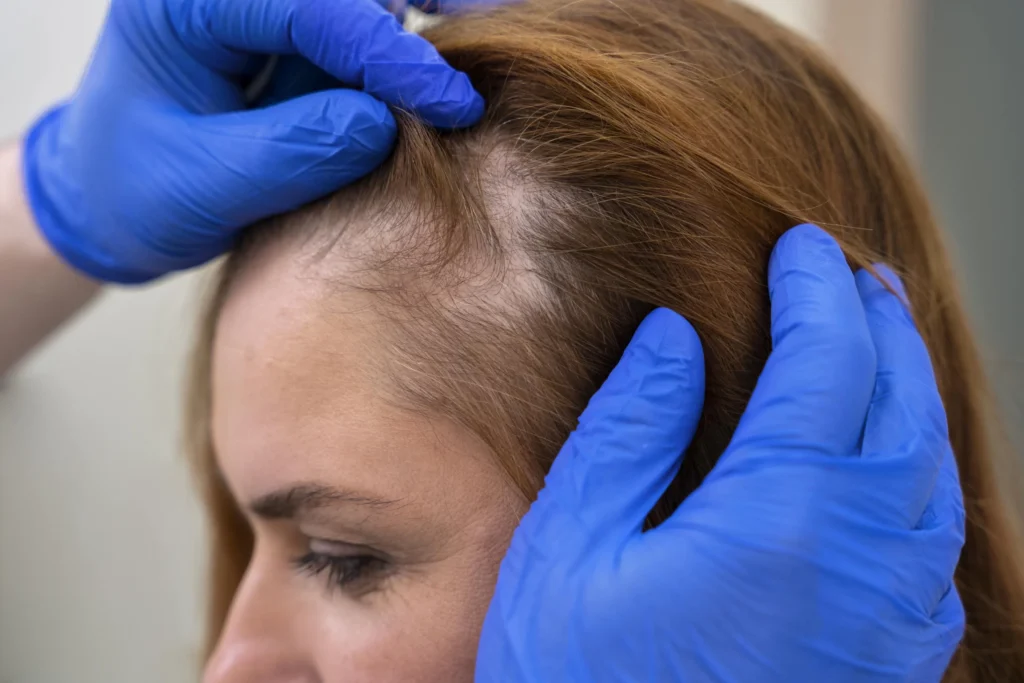
- thinning throughout the scalp
- noticeable decrease in hair volume
- scalp becoming more visible overall
Unlike alopecia areata, telogen effluvium usually does not cause round bald patches, and the scalp often looks normal.
How telogen effluvium is diagnosed
Diagnosis is usually clinical and based on:
- medical history and recent triggers
- physical examination of the scalp
- hair pull test (gentle traction test)
- dermoscopy/trichoscopy in many cases
A healthcare professional may recommend blood tests if deficiencies or hormonal issues are suspected.
Common blood tests requested
Tests often include:
- complete blood count (CBC)
- ferritin and iron levels
- vitamin D
- vitamin B12
- thyroid function tests (TSH, free T4)
- zinc (in selected cases)
- glucose levels
- hormonal evaluation (especially in women with irregular periods or acne)
Treatment: what actually helps
The best treatment for telogen effluvium is addressing the underlying cause.
Key measures include:
- correcting iron deficiency or anemia
- treating thyroid disorders
- improving protein intake and nutrition
- avoiding extreme dieting
- managing stress and improving sleep
- stopping or changing a triggering medication (only with medical guidance)
📌 In most cases, hair regrowth occurs naturally once the trigger is resolved.
Hair supplements are only helpful if a deficiency is confirmed.
How long it lasts and recovery timeline
Telogen effluvium typically lasts 3 to 6 months, but some cases may persist longer.
Recovery is gradual:
- shedding decreases first
- new hair begins growing
- volume slowly returns over months
Many people need 6 to 12 months for full improvement.
Emotional impact and quality of life
Even though telogen effluvium is usually not dangerous, it can significantly affect mental well-being.
Many people experience:
- anxiety
- stress and fear of going bald
- low self-esteem
- social insecurity
In some cases, psychological support may be helpful, especially if stress was part of the original trigger.
Myths and facts
“Telogen effluvium always turns into baldness.”
Myth. It is usually temporary and reversible.
“Hair loss starts immediately after stress.”
Myth. It often starts 2–3 months later.
“Iron deficiency can cause hair shedding.”
Fact. Low ferritin is a common contributor.
“Cutting your hair stops it from falling out.”
Myth. Cutting may improve appearance but does not affect the hair cycle.
Quick FAQ
Is telogen effluvium curable?
Yes. Most cases resolve once the trigger is corrected.
Can telogen effluvium cause permanent baldness?
Rarely. It usually causes temporary thinning.
Does minoxidil help telogen effluvium?
It may help in selected cases, but it is not always necessary and should be discussed with a professional.
When should I see a dermatologist?
If shedding is severe, lasts more than 3 months, or is associated with scalp inflammation, patchy hair loss, weight loss, fatigue, or signs of anemia.
Important notice (health disclaimer)
This content is for educational purposes only and does not replace professional medical advice. Sudden or severe hair shedding, hair loss lasting longer than a few months, patchy bald spots, scalp pain, inflammation, unexplained weight loss, or symptoms of anemia should be evaluated by a healthcare professional.
References and further reading
American Academy of Dermatology (AAD). Hair loss: causes and diagnosis.
Mayo Clinic. Hair loss: causes and treatment.
Cleveland Clinic. Telogen effluvium overview.
National Health Service (NHS). Hair loss: causes and treatment.
International Society of Hair Restoration Surgery (ISHRS). Telogen effluvium and hair shedding.