
Contents
What is cholelithiasis
Symptoms: how to recognize biliary colic
Risk factors and who should be evaluated
Diagnosis: tests that clarify the picture
Major complications
Treatment: observation, medications, ERCP, and surgery
Pregnancy and gallstones
Post-op and everyday life
Prevention: habits and special situations
Quick FAQ
Health disclaimer
References and recommended reading
What is cholelithiasis
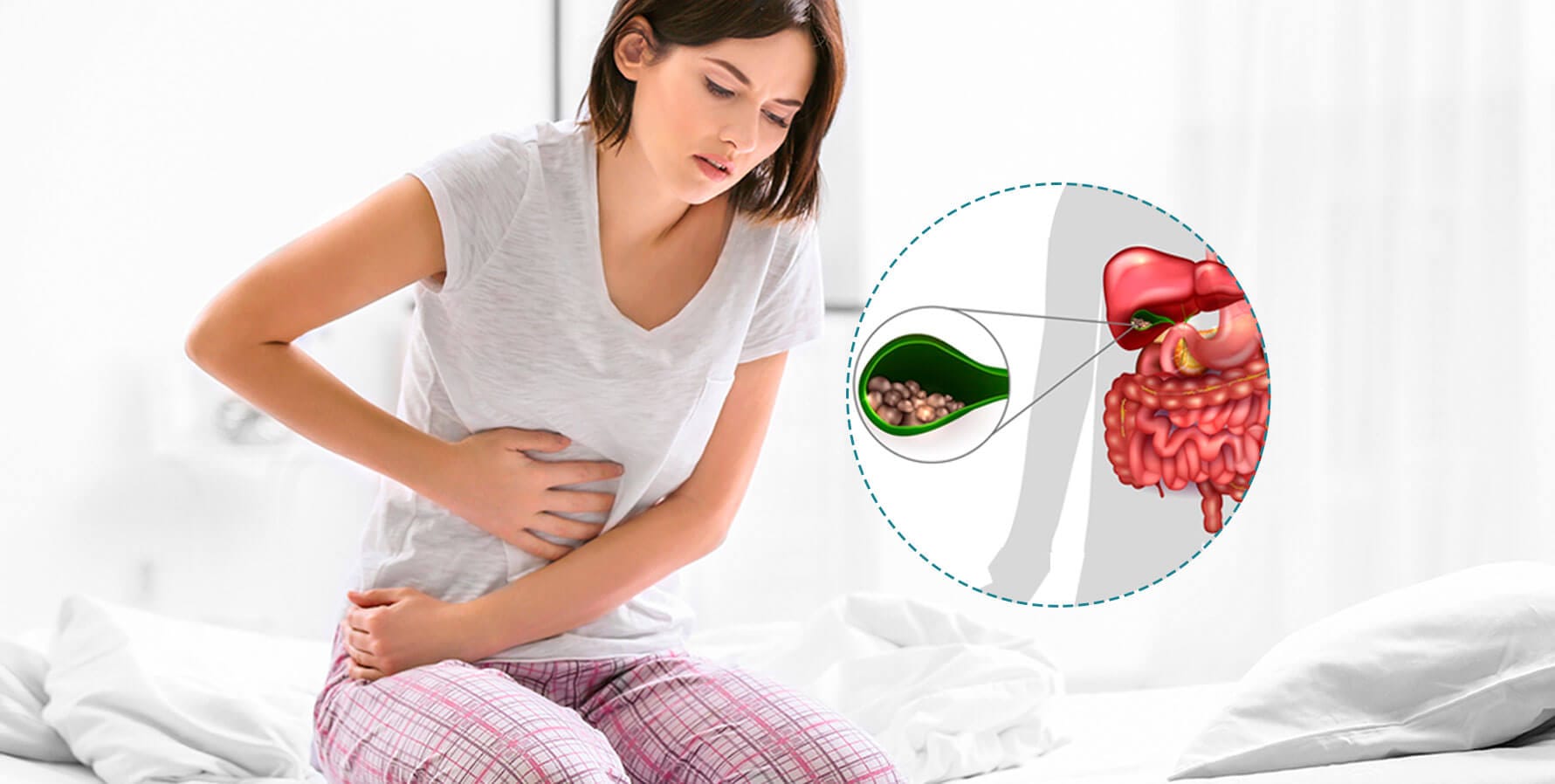
Cholelithiasis is the presence of stones inside the gallbladder. Most are cholesterol stones; pigment stones are linked to chronic hemolysis or biliary infection. Many people remain asymptomatic. Pain occurs when a stone transiently blocks the cystic duct (biliary colic). Prolonged obstruction with inflammation of the gallbladder wall leads to acute cholecystitis.
Symptoms: how to recognize biliary colic
Biliary colic is a squeezing pain in the right upper abdomen or epigastrium that may radiate to the back or right shoulder. It often starts 30 to 90 minutes after a fatty meal, lasts 30 minutes to a few hours, and may come with nausea or vomiting. Between attacks the person feels well. Fever, continuous pain for more than 6 hours, and jaundice suggest complications, not simple colic.
Seek urgent care if: pain does not improve, fever or chills occur, eyes or skin turn yellow, vomiting is persistent, or overall condition worsens.
Risk factors and who should be evaluated
Common cholesterol stone risks: female sex, age over 40, overweight or obesity, pregnancy, estrogen use, and family history. Rapid weight loss and bariatric surgery increase risk. Conditions such as diabetes, ileal Crohn’s disease, and chronic hemolysis are associated.
Evaluation is recommended for those with:
Typical biliary colic
Lab evidence of cholestasis
Suspected complications (jaundice, fever, pancreatitis)
Special situations with high future risk, such as hemoglobinopathies, immunosuppression, or transplant candidates
Diagnosis: tests that clarify the picture
Abdominal ultrasound is first line. It detects stones, wall thickening, and indirect signs of inflammation.
Blood tests help distinguish simple colic from complications: bilirubin, alkaline phosphatase, GGT, transaminases, amylase/lipase, and CBC.
When choledocholithiasis is suspected, MRCP or EUS (endoscopic ultrasound) can be used. ERCP is preferred when probability is high and mainly for therapy.
Major complications
Acute cholecystitis: continuous pain, fever, guarding, positive Murphy sign. Requires antibiotics and, in most cases, cholecystectomy during the same admission.
Choledocholithiasis: stone in the common bile duct, with jaundice and elevated cholestatic enzymes.
Cholangitis: infection of the bile ducts. Charcot triad (fever, jaundice, abdominal pain) and, in severe cases, Reynolds pentad (plus hypotension and confusion). This is an emergency that needs antibiotics and biliary drainage with ERCP.
Gallstone pancreatitis: pancreatic inflammation due to a stone at the ampulla. Severe epigastric pain radiating to the back with elevated amylase/lipase.
Less common: Mirizzi syndrome and gallstone ileus.
Treatment: observation, medications, ERCP, and surgery
Management depends on symptoms and complication risk.
Asymptomatic
Routine gallbladder removal is not recommended. Consider prophylactic cholecystectomy in selected scenarios: very large stones (often above 2 to 3 cm), gallbladder polyps larger than 10 mm or growing, porcelain gallbladder, chronic hemolysis, and some immunosuppressed or transplant situations. After bariatric surgery many teams avoid routine removal and use short-term ursodeoxycholic acid (UDCA, ursodiol) to reduce stone formation.
Recurrent biliary colic
Laparoscopic cholecystectomy is the standard with quick recovery. Analgesics and antiemetics bridge symptoms until surgery. Chemical dissolution with UDCA helps only in a few well-selected cases (small cholesterol stones, functioning gallbladder) and relapse is common after stopping.
Complications
Acute cholecystitis: targeted antibiotics and early cholecystectomy.
Choledocholithiasis/cholangitis: ERCP to remove the stone and decompress, followed by cholecystectomy to prevent recurrence.
Gallstone pancreatitis: supportive care. After clinical improvement, schedule cholecystectomy during the same admission or soon after to prevent relapse.
Surgical risks and benefits are individualized. In high surgical risk, temporary percutaneous or endoscopic drainage can be alternatives.
Pregnancy and gallstones
Pregnancy increases biliary stasis and cholesterol saturation. First episodes are often managed conservatively. With recurrence or complications, laparoscopic cholecystectomy is considered safe, especially in the second trimester in experienced centers. For suspected common bile duct stones, ERCP with minimal or no fluoroscopy techniques can be performed when necessary.
Post-op and everyday life
After cholecystectomy, bile drains continuously into the intestine. Most people resume a usual diet within days. Some experience looser stools early on; if persistent, discuss targeted management with the care team.
Tips:
Start with smaller, more frequent meals in the first week
Gradually return to physical activity as advised
There is no universal long-term “fat-free” diet; personalize based on tolerance
Prevention: habits and special situations
Maintain a healthy weight and lose weight gradually; avoid extreme diets and prolonged fasting
Favor a diet rich in fiber, fruits and vegetables, with unsaturated fats, and low in ultra-processed foods
Exercise regularly and control diabetes and dyslipidemia
After bariatric surgery or rapid weight loss, discuss short-term UDCA prophylaxis
Review estrogen use and other medications with your clinician when risk is elevated
Quick FAQ
Are small stones more dangerous?
Small stones can migrate into the common bile duct and trigger pancreatitis. Very large stones may raise long-term local risks. Both deserve individualized assessment.
Do I need surgery if I have stones but no symptoms?
Usually no. Exceptions include high-risk scenarios such as large polyps, porcelain gallbladder, very large stones, and chronic hemolysis.
Can medication dissolve stones?
UDCA works only in a minority of specific cases and recurrence after stopping is common. For symptomatic disease, surgery is usually the effective solution.
Is the surgery very painful?
Laparoscopic surgery typically causes moderate pain and allows rapid recovery. Same-day or next-day discharge is common.
Do I need a fat-free diet forever?
No. After an adaptation period, most people eat normally. Fine-tune choices based on personal tolerance.
Health disclaimer
This content is educational and does not replace medical care. Prolonged biliary pain, fever, jaundice, or persistent vomiting are warning signs that require prompt evaluation. Decisions between observation, endoscopy, and surgery are individualized.
References and recommended reading
WGO / ACG. Global and American practice guidance on gallstone disease, acute cholecystitis, and choledocholithiasis.
Tokyo Guidelines. Diagnostic criteria and management pathways for acute cholecystitis and acute cholangitis.
ESGE / ASGE. Recommendations on evaluating choledocholithiasis and the roles of EUS, MRCP, and therapeutic ERCP.
EASL. Guidelines on gallbladder and biliary tract disease, including management during pregnancy.
Cochrane Reviews. Early cholecystectomy for acute cholecystitis and strategies in mild gallstone pancreatitis.