
Topics covered in this post
What basal cell carcinoma is and how it develops
Signs, symptoms, and who is at higher risk
Why it should not be ignored despite being common
Diagnosis: when to suspect it and how it is confirmed
Most common types of basal cell carcinoma
Treatment: options and selection criteria
Prognosis and risk of recurrence
Prevention and everyday skin care
Myths and facts
Quick FAQ
Important notice (health disclaimer)
References and recommended reading
What is basal cell carcinoma and how does it develop
Basal cell carcinoma (BCC) is the most common type of skin cancer. It originates from basal cells, which are located in the deepest layer of the epidermis and are responsible for continuous skin renewal.
Its development is directly related to cumulative exposure to ultraviolet (UV) radiation, especially over a lifetime. Unlike other cancers, BCC usually grows slowly and rarely spreads to other organs, but it can cause significant local tissue destruction if left untreated.
Signs, symptoms, and who is at higher risk
Most common manifestations:
A wound that does not heal or heals and then reopens
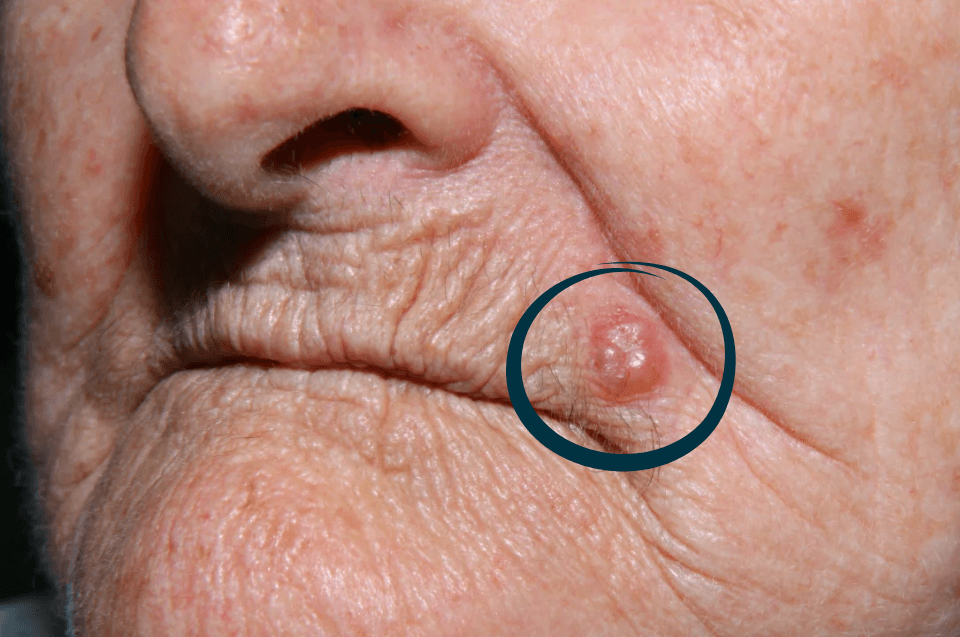
A shiny, pearly, or translucent lesion
A pink or reddish patch that grows slowly
A small bump with visible blood vessels
A lesion that bleeds easily or forms recurrent scabs
Most affected areas are those with greater sun exposure:
Face (nose, eyelids, lips)
Scalp
Ears
Neck
Risk factors:
Chronic sun exposure without protection
History of sunburns
Fair skin, light-colored eyes, and light hair
Age over 40
Personal or family history of skin cancer
Use of tanning beds
Why it should not be ignored despite being common
Although basal cell carcinoma has a low risk of metastasis, it can:
Invade surrounding tissues
Cause significant cosmetic deformities
Affect structures such as the eyes, nose, and ears
Make treatment more complex when diagnosed late
Delayed diagnosis is one of the main causes of complications.
Diagnosis: when to suspect it and how to confirm
Suspicion usually arises during a clinical examination, but definitive diagnosis is made through a skin biopsy with histopathological analysis.
Imaging tests are rarely needed, except in extensive or recurrent cases.
Most common types of basal cell carcinoma
Nodular: the most frequent type, with a pearly appearance
Superficial: reddish, scaly patch
Pigmented: may resemble melanoma
Sclerodermiform (infiltrative): less common but more locally aggressive
Identifying the subtype helps determine the most appropriate treatment.
Treatment: options and selection criteria
Treatment depends on lesion size, location, subtype, and the patient’s clinical history.
Commonly used options include:
Conventional surgical excision
Mohs micrographic surgery (especially for high-risk facial areas)
Topical treatments in selected superficial cases
Destructive methods (curettage, electrodessication) in specific situations
When treated appropriately, cure rates are very high.
Prognosis and risk of recurrence
The prognosis for basal cell carcinoma is excellent. However:
Individuals who have had BCC are at increased risk of developing new lesions
Regular dermatologic follow-up is essential
Prevention and everyday skin care
Daily use of sunscreen (even on cloudy days)
Avoiding sun exposure during peak hours
Wearing hats, protective clothing, and UV-blocking sunglasses
Avoiding artificial tanning
Performing regular skin self-examinations
Myths and facts
“Skin cancer only appears as a dark mole.”
Myth. Basal cell carcinoma is often not pigmented.
“If it doesn’t hurt, it’s not serious.”
Myth. Most BCCs are painless.
“Once treated, you’re in the clear.”
Myth. The risk of new lesions remains.
Quick FAQ
Is every non-healing wound cancer?
No, but any persistent wound should be evaluated.
Can basal cell carcinoma be fatal?
Rarely, but it can cause significant local damage.
Does sunscreen really prevent it?
Yes. It is the main proven preventive measure.
Important notice (health disclaimer)
This content is for educational purposes only and does not replace medical evaluation. Persistent skin lesions, changes in appearance, or bleeding should be assessed by a healthcare professional.
References and recommended reading
Brazilian Society of Dermatology (SBD). Non-melanoma skin cancer.
INCA – National Cancer Institute (Brazil). Skin cancer: signs, prevention, and treatment.
American Academy of Dermatology (AAD). Basal cell carcinoma.
NCCN Guidelines. Basal Cell Skin Cancer.