

Topics covered in this article
- What is sleep paralysis?
- What is the relationship with REM sleep?
- Why does sleep paralysis happen?
- Symptoms and common experiences
- Hallucinations, sensed presence, and chest pressure
- Risk factors
- Relationship with narcolepsy and other sleep disorders
- Diagnosis and medical evaluation
- Treatment and practical care
- What to do during an episode?
- When should you seek medical help?
- Myths and facts
- Quick FAQ
- Important disclaimer
- References and further reading
What is sleep paralysis?
Sleep paralysis is a phenomenon in which a person is waking up or falling asleep, becomes aware of their surroundings, but cannot move or speak for a short period of time.
During an episode, awareness is usually preserved. A person may hear sounds, recognize the room, try to call for help, or attempt to move, but feel that the body is not responding.
Although the experience can be frightening, sleep paralysis is usually temporary and, in most cases, is not a medical emergency.
It happens because of a mismatch between consciousness and the normal mechanisms of sleep, especially those related to REM sleep, the stage in which dreams are often most vivid.
Important: sleep paralysis does not mean that a person is “going crazy,” being possessed, dying, or necessarily experiencing a serious disease. Most of the time, it is a sleep-related phenomenon. However, frequent or highly distressing episodes should be evaluated.
What is the relationship with REM sleep?
Sleep occurs in different stages throughout the night. One of these stages is REM sleep, which stands for rapid eye movement.
During REM sleep, the brain is highly active and dreams tend to be more vivid. At the same time, the body enters a natural state of deep muscle relaxation called muscle atonia.
This atonia is a normal protective mechanism. It helps prevent the body from physically acting out dreams.
In sleep paralysis, this REM-related muscle atonia briefly continues even after the person has become conscious, or appears while the person is still partly awake while falling asleep.
In other words, the brain “wakes up” before the body has fully left the REM sleep pattern.
This combination can create the sensation of being trapped inside one’s own body, even though the episode usually resolves on its own.
Why does sleep paralysis happen?
Sleep paralysis happens when the transition between sleep and wakefulness is incomplete or disrupted.
It can occur at two main moments:
- While falling asleep: this is called hypnagogic sleep paralysis.
- While waking up: this is called hypnopompic sleep paralysis.
In many people, an episode occurs in isolation, without an associated disease. In others, it may be promoted by irregular sleep, sleep deprivation, stress, or other sleep disorders.
Sleep paralysis can also become recurrent, causing fear of going to sleep, anxiety before bedtime, and reduced quality of life.
Important: a single isolated episode of sleep paralysis does not, by itself, mean that a person has a neurological or psychiatric disorder.
Symptoms and common experiences
The central symptom of sleep paralysis is a temporary inability to move or speak while the person is conscious or partly conscious.
Experiences vary, but the most common reports include:
- Waking up and being unable to move the arms, legs, or trunk.
- Trying to speak or scream but being unable to make a sound.
- Feeling stuck to the bed.
- Intense fear during the episode.
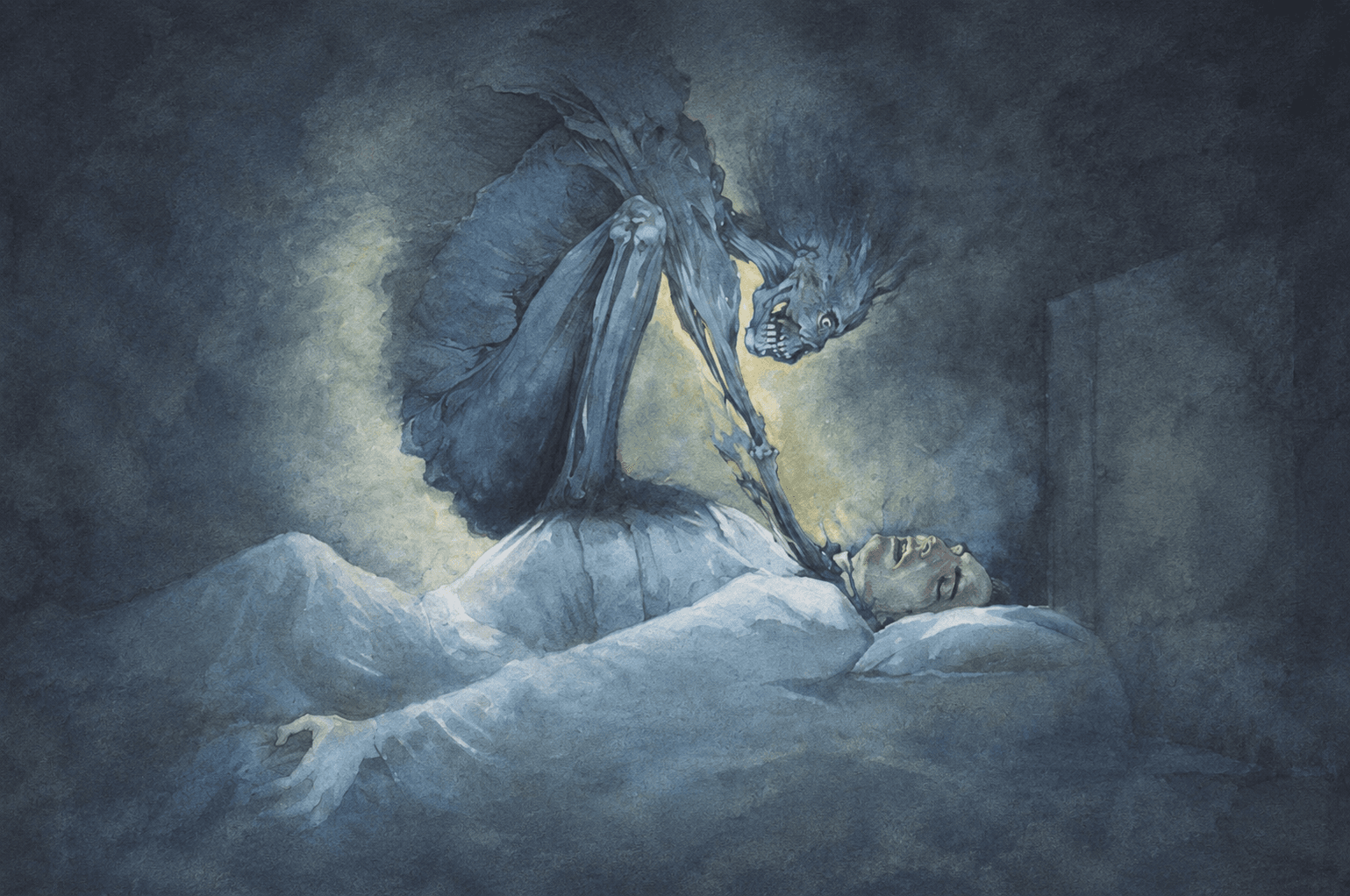
- A sensation of pressure on the chest.
- A feeling of shortness of breath, even when there is not necessarily a true breathing arrest.
- A sensation that someone or something is present in the room.
- Visual, auditory, or tactile hallucinations.
- Seeing shadows, figures, or hearing sounds.
- Episodes lasting from seconds to a few minutes.
- Spontaneous recovery of movement.
After the episode, it is common to feel frightened, confused, or afraid to go back to sleep.
Despite the discomfort, recovery is usually complete and quick.
Hallucinations, sensed presence, and chest pressure
One of the most striking features of sleep paralysis is that it may be accompanied by very vivid perceptual experiences.
Some people report seeing shadows, hearing footsteps, sensing that someone is in the room, or feeling pressure on the chest.
These experiences may occur because dream-related elements of REM sleep remain active while the person is already partly conscious.
For this reason, sleep paralysis can feel extremely real while it is happening.
Does this mean the person is experiencing psychosis?
In most cases, no.
Hallucinations related to sleep paralysis usually occur only during the transition between sleep and wakefulness, are brief, and disappear once the episode ends.
This is different from persistent hallucinations during the day, loss of contact with reality, prolonged confusion, or other psychiatric symptoms that require specific evaluation.
Why can there be a sensation of chest pressure?
During REM sleep, breathing may become more shallow and the muscles of the body are relaxed. When a person becomes partly awake, this combination may be perceived as chest pressure or difficulty breathing.
In addition, intense fear during the episode may increase the feeling of breathing discomfort.
Important: severe chest pain, persistent shortness of breath, fainting, intense palpitations, or symptoms that continue after movement returns should not automatically be attributed to sleep paralysis. In these situations, medical care is needed.
Risk factors
Sleep paralysis can happen to anyone, but some factors increase the likelihood of episodes.
Associated factors include:
- Sleep deprivation.
- Irregular sleep and wake schedules.
- Fragmented sleep.
- Emotional stress.
- Anxiety.
- Sleep disorders, such as narcolepsy and obstructive sleep apnea.
- Shift work.
- Jet lag or sudden time zone changes.
- Sleeping on the back in some people.
- Alcohol or other substances that impair sleep quality.
- Family history in some cases.
It is not always possible to identify a single cause.
Sleep paralysis often appears during periods of greater fatigue, irregular routines, stress, or insufficient sleep.
Relationship with narcolepsy and other sleep disorders
Sleep paralysis may occur on its own, but it can also be one of the symptoms associated with narcolepsy.
Narcolepsy is a neurological sleep disorder characterized by excessive daytime sleepiness and altered regulation of REM sleep.
In addition to sleep paralysis, other signs that may suggest narcolepsy include:
- Intense daytime sleepiness, even after what seems to be an adequate night of sleep.
- Falling asleep involuntarily in inappropriate situations.
- Cataplexy, which is a sudden loss of muscle tone triggered by emotions such as laughter or surprise.
- Hallucinations while falling asleep or waking up.
- Fragmented nighttime sleep.
Sleep paralysis may also coexist with other problems, such as insomnia, obstructive sleep apnea, and anxiety.
Important: when there is significant daytime sleepiness, frequent episodes, sudden collapses due to loss of muscle tone, or functional impairment, medical evaluation is recommended.
Diagnosis and medical evaluation
The diagnosis of sleep paralysis is usually clinical, based on the description of the episodes.
During the consultation, a healthcare professional may ask about:
- How often the episodes occur.
- Approximate duration.
- Whether they happen while falling asleep or waking up.
- Presence of hallucinations or chest pressure.
- Sleep quality and sleep duration.
- Sleep schedule.
- Use of medications, alcohol, or other substances.
- Stress and anxiety levels.
- Daytime sleepiness.
- Snoring, breathing pauses, or suspected sleep apnea.
- Symptoms compatible with narcolepsy.
In mild and infrequent cases, tests may not be necessary.
When another sleep disorder is suspected, the clinician may recommend further investigation.
Sleep diary
A sleep diary can help identify patterns.
In it, the person records sleep and wake times, nighttime awakenings, naps, caffeine intake, screen use, sleep paralysis episodes, and perceived sleep quality.
Polysomnography
Polysomnography is a test that monitors several parameters during sleep.
It may be indicated when there is suspicion of sleep apnea, abnormal nighttime movements, significant excessive daytime sleepiness, or other conditions that need to be differentiated.
Multiple sleep latency test
This test may be used in the evaluation of narcolepsy and excessive daytime sleepiness, usually after specialist assessment.
Important: not everyone with sleep paralysis needs testing. The decision depends on frequency, intensity, associated symptoms, and impact on daily life.
Treatment and practical care
Treatment for sleep paralysis depends on how often episodes occur and how much emotional distress they cause.
In many cases, sleep hygiene measures and a more regular routine can help significantly.
Measures that may reduce episodes
- Maintain regular times for sleeping and waking.
- Sleep an adequate number of hours for age and individual needs.
- Avoid sleep deprivation.
- Reduce screen use close to bedtime.
- Avoid caffeine late in the day, especially in people who are sensitive to it.
- Avoid using alcohol as a strategy to fall asleep.
- Create a relaxing routine before bed.
- Treat insomnia, anxiety, sleep apnea, or other associated factors.
- Observe whether sleeping on the back increases episodes.
- Exercise regularly, while avoiding intense exercise very close to bedtime.
Treatment of associated conditions
When sleep paralysis is linked to another problem, treatment should address the underlying cause.
For example:
- In sleep apnea, snoring, breathing pauses, and drops in oxygen levels during sleep may need treatment.
- In insomnia, it may be necessary to address habits, thoughts, and behaviors that maintain difficulty sleeping.
- In anxiety, psychological strategies and appropriate treatment may reduce the impact of episodes.
- In narcolepsy, specialist follow-up is essential.
Medications
Medication is not necessary for most people with isolated sleep paralysis.
In specific cases, especially when episodes are frequent, disabling, or associated with narcolepsy, a clinician may consider targeted treatments.
This decision should be individualized, as it depends on the diagnosis, associated symptoms, contraindications, and each person’s health profile.
Important: sleeping pills, anti-anxiety medications, or antidepressants should not be started without medical guidance to treat sleep paralysis.
What to do during an episode?
During sleep paralysis, fear can intensify the feeling of being out of control.
Some strategies may help a person get through the episode with less distress:
- Try to remember that the episode is temporary and usually passes on its own.
- Focus on breathing, noticing air moving in and out.
- Avoid desperately fighting against the body, as this can increase panic.
- Try to move small body parts, such as fingers, toes, or the tongue.
- Focus on blinking or changing the breathing rhythm.
- After the episode, get up for a few minutes, turn on a soft light, and regain calm before going back to sleep.
When a person shares a bed or room with someone and episodes are frequent, it may be helpful to explain what happens.
In some cases, a gentle touch or calling the person by name may help interrupt the episode, but this should be agreed upon beforehand and done calmly.
When should you seek medical help?
Isolated and rare episodes of sleep paralysis usually do not require urgent care.
However, medical evaluation is recommended when:
- Episodes are frequent.
- There is intense fear of sleeping.
- Sleep quality is impaired.
- There is excessive daytime sleepiness.
- The person falls asleep involuntarily during activities.
- There is sudden loss of strength triggered by emotions, such as laughter or surprise.
- There is loud snoring, choking during sleep, or observed breathing pauses.
- There are symptoms of anxiety, panic, or persistent insomnia.
- Symptoms are not limited to the period of falling asleep or waking up.
- There is prolonged confusion, fainting, seizures, or persistent weakness after the episode.
It is also important to seek urgent care if there is severe chest pain, persistent shortness of breath, fainting, neurological symptoms, or any severe symptom that does not quickly resolve.
Important: not everything that happens at night is sleep paralysis. Some neurological, cardiac, respiratory, and psychiatric conditions can cause nighttime symptoms and need to be differentiated.
Myths and facts
“Sleep paralysis is always a sign of a serious disease.”
Myth.
“A person may be conscious and unable to move for a few seconds or minutes.”
Fact.
“Hallucinations during sleep paralysis necessarily mean psychosis.”
Myth.
“Sleep deprivation and irregular routines can increase the risk of episodes.”
Fact.
“Sleep paralysis can be associated with narcolepsy in some cases.”
Fact.
“Everyone with sleep paralysis needs medication.”
Myth.
“Improving sleep regularity may help reduce episodes in many people.”
Fact.
Quick FAQ
Is sleep paralysis dangerous?
In most cases, no. It is usually temporary and does not directly cause physical harm. However, frequent, highly distressing episodes or episodes associated with other symptoms should be evaluated.
How long does sleep paralysis last?
It usually lasts seconds to a few minutes. It may feel longer because of fear and the sensation of immobility.
Can sleep paralysis be cured?
Many people improve with a more regular sleep routine and control of associated factors. In other cases, conditions such as insomnia, sleep apnea, anxiety, or narcolepsy may need to be investigated and treated.
Why do I feel a presence in the room?
This sensation may occur because dream-related elements remain active while the person is partly awake. This can create very realistic perceptions, such as shadows, sounds, or a sense of threat.
Is sleep paralysis the same as a nightmare?
No. During a nightmare, a person is dreaming and usually moves normally after waking up. In sleep paralysis, there is awareness or partial awareness with a temporary inability to move.
Is it normal to feel short of breath?
Some people feel chest pressure or breathing discomfort during the episode. However, persistent shortness of breath, chest pain, or intense symptoms outside the episode require medical evaluation.
Can sleeping on the back make it worse?
In some people, yes. Episodes are sometimes reported more often in this position. Observing individual patterns can help.
Can sleep paralysis happen in children and teenagers?
It can occur at different ages, although it is commonly reported in teenagers and young adults. When there is significant distress or daytime sleepiness, medical evaluation is recommended.
Important disclaimer
This content is for educational purposes only and does not replace professional medical evaluation. Sleep paralysis is usually a benign and temporary phenomenon, but frequent or highly distressing episodes, excessive daytime sleepiness, sudden loss of muscle tone, loud snoring, breathing pauses during sleep, prolonged confusion, seizures, fainting, chest pain, or persistent shortness of breath should be evaluated by a healthcare professional. If symptoms are severe or persistent, seek medical care.
References and further reading
- American Academy of Sleep Medicine (AASM). International Classification of Sleep Disorders.
- National Institute of Neurological Disorders and Stroke (NINDS). Narcolepsy information and sleep-related symptoms.
- National Health Service (NHS). Sleep paralysis: overview, symptoms, and self-care.
- Mayo Clinic. Sleep paralysis: symptoms and causes.
- Cleveland Clinic. Sleep paralysis: causes, symptoms, and treatment.
- Sleep Foundation. Sleep paralysis: causes, symptoms, and prevention.
- Merck Manual Professional Version. Parasomnias and sleep-related disorders.
- National Heart, Lung, and Blood Institute (NHLBI). Sleep deprivation and deficiency.