
Topics covered in this article
- What is Dravet syndrome?
- Why talk about Dravet syndrome?
- How does Dravet syndrome usually begin?
- Causes and genetics: what is the role of the SCN1A gene?
- Types of seizures in Dravet syndrome
- Symptoms beyond seizures
- Triggers that may increase seizure risk
- Diagnosis and tests
- Treatment and seizure control
- Medications that may worsen seizures in Dravet syndrome
- Emergency plan for prolonged seizures
- Development, learning, and rehabilitation
- Daily care and quality of life
- Possible complications
- Myths and facts
- Quick FAQ
- Important disclaimer
- References and further reading
What is Dravet syndrome?
Dravet syndrome is a rare and severe genetic epilepsy that usually begins in the first year of life, often in an infant who previously appeared to be developing normally.
It belongs to a group of conditions known as developmental and epileptic encephalopathies. This term is used when seizures and the underlying neurological disorder can affect cognition, movement, behavior, communication, and quality of life.
In Dravet syndrome, seizures are often frequent, prolonged, difficult to control, and may be triggered by fever, increased body temperature, infections, heat, physical exertion, flashing lights, sleep deprivation, or sometimes vaccination-related fever.
Over time, many children may also develop developmental delay, language difficulties, gait problems, behavioral changes, sleep disorders, and a need for multidisciplinary care.
Important: Dravet syndrome is not simply a “strong febrile seizure.” It is a complex neurological condition that requires careful diagnosis, specialized treatment, and ongoing family guidance.
Why talk about Dravet syndrome?
June 23 is internationally recognized as a day of awareness for Dravet syndrome.
However, beyond the date itself, the most important goal is to educate people about the condition.
Dravet syndrome is still not widely known outside specialized medical and patient communities. This can delay diagnosis, lead early symptoms to be mistaken for common febrile seizures, and make it harder for families to access appropriate guidance.
High-quality information helps families, caregivers, teachers, and healthcare professionals recognize warning signs and understand that children with Dravet syndrome need broad, continuous, and individualized care.
It is also important to challenge the idea that all epilepsy is the same. There are many types of epilepsy, with different causes, prognoses, and treatments.
Dravet syndrome is a clear example of how identifying the correct epilepsy syndrome can influence treatment choices and help avoid medications that may worsen seizures.
How does Dravet syndrome usually begin?
Dravet syndrome usually begins during the first year of life, often between 4 and 12 months of age.
The first sign is commonly a prolonged seizure, often associated with fever or an increase in body temperature.
This first seizure may have important features:
- It occurs in an infant who previously seemed to be developing normally.
- It may be prolonged, lasting longer than a typical simple febrile seizure.
- It may involve one side of the body, such as one arm, one leg, or half of the body.
- It may occur after fever, infection, a hot bath, excessive heat, or vaccination-related fever.
- It may recur in later episodes, with or without fever.
- It may require emergency care because of prolonged duration.
In the first months or years, Dravet syndrome may be confused with simple febrile seizures, especially when early tests do not show clear abnormalities.
Over time, however, the pattern usually becomes more suggestive, with recurrent seizures, different seizure types, and increasing difficulty controlling them.
Important: not every prolonged febrile seizure is Dravet syndrome. However, very long, repeated, focal seizures in a young infant, especially when associated with developmental concerns, should be carefully evaluated.
Causes and genetics: what is the role of the SCN1A gene?
Dravet syndrome is most often caused by genetic changes that affect how neurons regulate electrical activity.
The gene most commonly associated with Dravet syndrome is SCN1A, which provides instructions related to sodium channels that are important for nerve cell function.
Changes in this gene can disrupt the balance between excitation and inhibition in the brain, making seizures more likely.
In most cases, the genetic change occurs for the first time in the child and is not inherited from either parent. This is called a de novo variant.
This means that, in many families, Dravet syndrome did not happen because anyone did something wrong during pregnancy, birth, or early childcare.
Important genetic points include:
- SCN1A is the gene most strongly associated with Dravet syndrome.
- Not every SCN1A variant causes Dravet syndrome.
- Some people with a clinical picture compatible with Dravet syndrome may not have a variant identified by available testing.
- Other genes may be associated with Dravet-like conditions.
- Genetic counseling may be important for family guidance.
Important: genetic results should be interpreted together with the clinical history, seizure types, age at onset, developmental course, and neurological evaluation.
Types of seizures in Dravet syndrome
Dravet syndrome can cause different types of seizures throughout life.
This variety can make the condition harder to recognize, especially early on.
Seizure types that may occur include:
- Clonic seizures: repetitive rhythmic jerking movements that may affect one side of the body or the whole body.
- Tonic-clonic seizures: loss of consciousness associated with stiffening and convulsive movements.
- Hemiclonic seizures: convulsive movements mainly affecting one side of the body.
- Myoclonic seizures: brief, sudden jerks that may look like startles or muscle twitches.
- Atypical absence seizures: episodes of staring, reduced responsiveness, and brief alteration of awareness.
- Focal seizures: seizures that begin in a specific region of the brain and may cause varied symptoms.
- Status epilepticus: a prolonged seizure or repeated seizures without adequate recovery between them.
Seizure patterns may change with age.
At some stages, fever-associated seizures may be more prominent. At others, seizures without fever, myoclonic seizures, atypical absences, or seizures during sleep may appear.
Important: detailed descriptions of seizures, and videos recorded by families when safe and possible, can be very helpful for neurological evaluation.
Symptoms beyond seizures
Although seizures are the most recognized feature, Dravet syndrome can affect many areas of development and daily functioning.
Some children may appear to develop normally at first, but later develop progressive difficulties.
Possible features beyond seizures include:
- Motor developmental delay.
- Language delay.
- Learning difficulties.
- Problems with motor coordination.
- Unsteady gait or walking difficulties.
- Sleep disorders.
- Attention difficulties.
- Hyperactivity or impulsivity.
- Autism spectrum features in some patients.
- Behavioral challenges.
- Feeding or growth difficulties in some cases.
- Increased sensitivity to heat and fever.
The degree of impairment varies from person to person.
Some patients have more independence, while others need ongoing support for daily activities.
For this reason, care should not focus only on seizure control. Development, communication, sleep, school, safety, and family well-being are also part of treatment.
Triggers that may increase seizure risk
In Dravet syndrome, certain situations may increase the likelihood of seizures.
Recognizing triggers can help families create prevention and safety strategies, although not all seizures can be prevented.
Common triggers include:
- Fever.
- Infections.
- Increased body temperature.
- Very hot baths.
- Excessive heat.
- Intense exercise in hot environments.
- Sleep deprivation.
- Significant physical stress.
- Flashing lights or visual stimulation in some patients.
- Vaccination-related fever or inflammatory response, which may trigger a seizure but does not cause the syndrome.
It is important to distinguish a trigger from a cause.
Fever or vaccination may trigger a seizure in a genetically predisposed child, but they are not considered the genetic cause of Dravet syndrome.
Important: vaccination decisions should be discussed with the child’s physician. In general, preventing infections is also very important, because infections can cause fever and trigger seizures.
Diagnosis and tests
The diagnosis of Dravet syndrome is based on a combination of clinical history, seizure pattern, age at onset, developmental course, neurological examination, and additional testing.
Early in the condition, some tests may be normal, which can delay suspicion.
Evaluation may include:
- A detailed description of seizures.
- History of fever, infection, vaccination-related fever, heat, or other triggers.
- Age at seizure onset.
- Duration of seizures.
- Presence of focal, hemiclonic, or prolonged seizures.
- Developmental assessment.
- Electroencephalogram.
- Brain MRI when indicated.
- Genetic testing, especially epilepsy gene panels or SCN1A analysis.
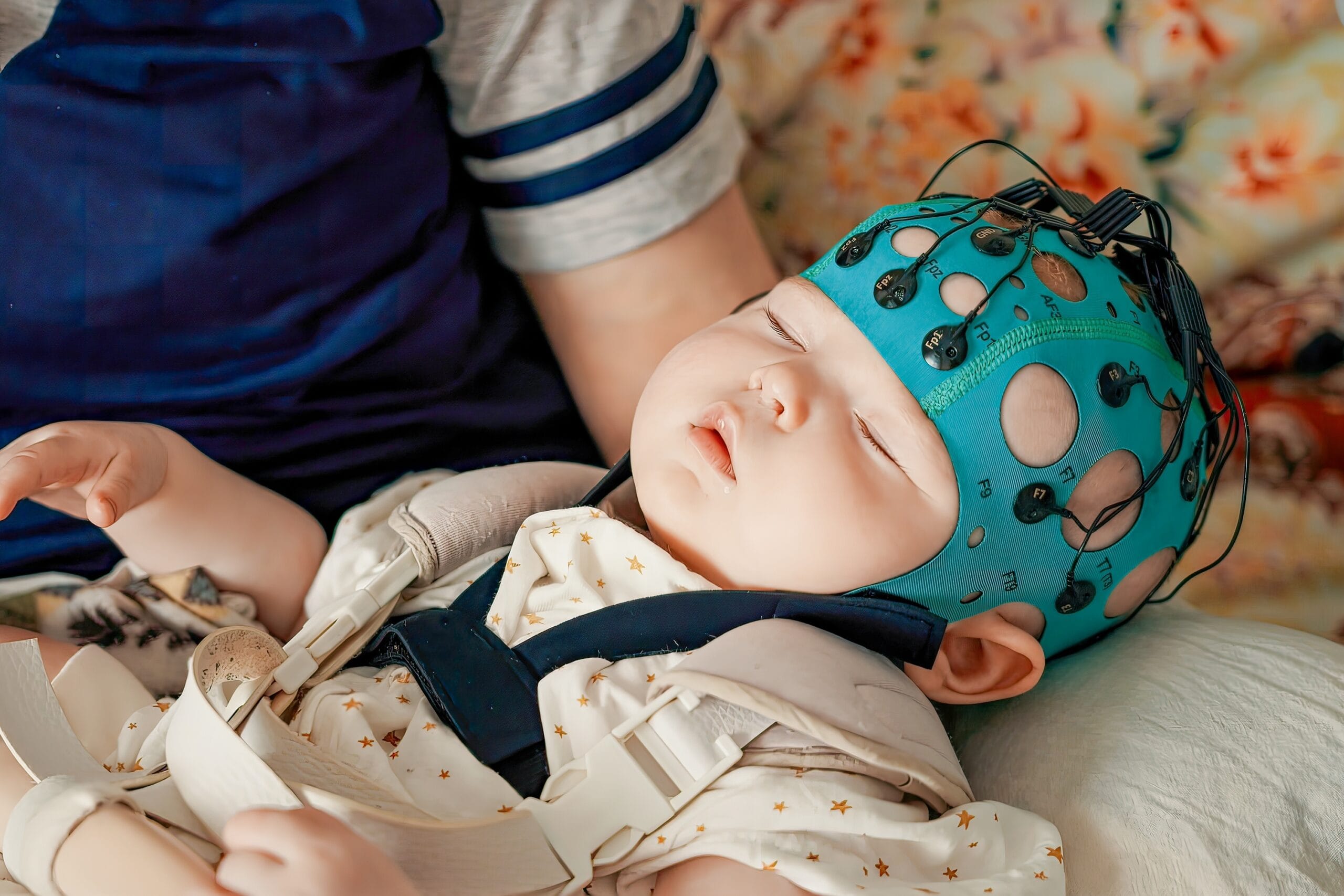
Electroencephalogram
An electroencephalogram, or EEG, evaluates the brain’s electrical activity.
In early stages, the EEG may be normal or nonspecific. Over time, it may show changes compatible with epilepsy, but the result must always be interpreted in the clinical context.
Brain MRI
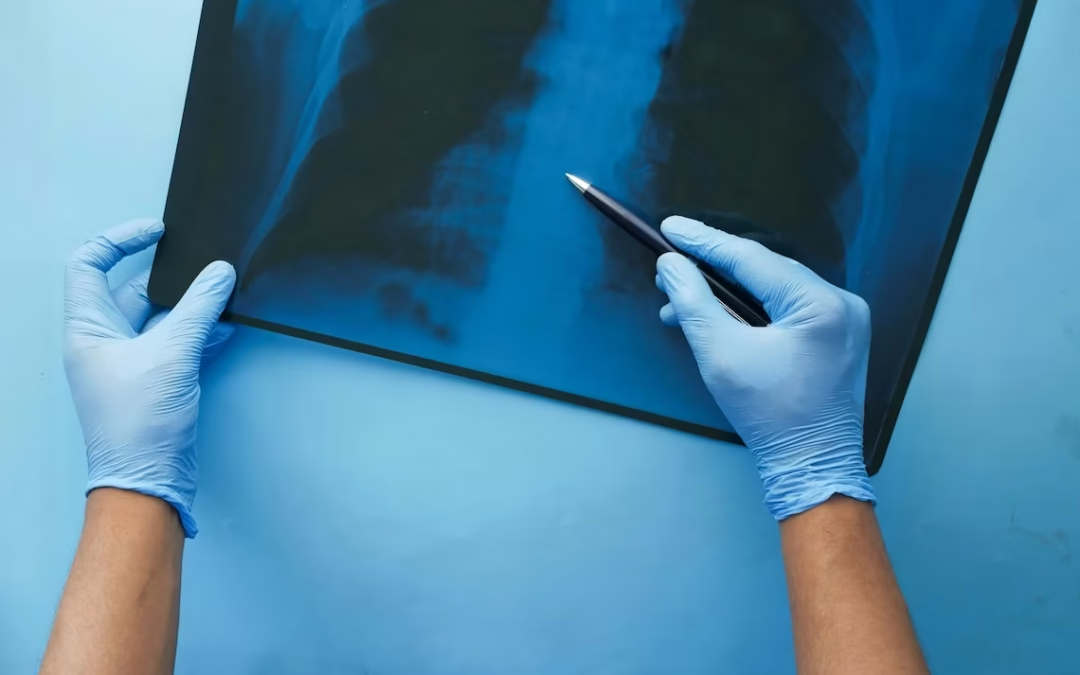
Brain MRI may be requested to investigate other causes of seizures, especially when there are specific neurological findings or diagnostic uncertainty.
In Dravet syndrome, MRI can be normal, particularly early in the course.
Genetic testing
Genetic testing may identify a variant associated with Dravet syndrome and help guide treatment and family counseling.
However, genetic testing must be interpreted carefully. Not every variant explains the clinical picture, and not every patient with clinical suspicion will have an identifiable variant.
Important: clinical suspicion is essential. Waiting for every test to become abnormal may delay diagnosis.
Treatment and seizure control
Treatment for Dravet syndrome is individualized and should be supervised by a clinician experienced in epilepsy, often a pediatric neurologist or epileptologist.
The goals are to reduce seizure frequency, duration, and severity, improve safety, support development, and help the family manage the condition.
Because Dravet syndrome is often difficult to control, many children require a combination of strategies.
Antiseizure medications
Several medications may be used in Dravet syndrome depending on the individual case, local availability, age, side effect profile, and response.
Options that may be considered by specialists include:
- Valproate.
- Clobazam.
- Stiripentol.
- Pharmaceutical cannabidiol in specific contexts.
- Fenfluramine in specific contexts.
- Topiramate in some cases.
- Levetiracetam in some patients.
- Rescue medications for prolonged seizures, such as benzodiazepines prescribed for emergency use.
The choice depends on individualized medical evaluation.
Not every medication is available in every country or healthcare system, and not every patient responds in the same way.
Ketogenic diet
The ketogenic diet may be considered in some cases of drug-resistant epilepsy.
It is a therapeutic diet with specific proportions of fats, proteins, and carbohydrates, designed to change brain metabolism and reduce seizures in some patients.
It should not be started without medical supervision.
This type of diet requires medical and nutritional monitoring, growth assessment, laboratory tests, and careful guidance to reduce risks.
Vagus nerve stimulation and other strategies
In selected patients, other options may be discussed, such as vagus nerve stimulation.
Indication depends on medication response, seizure profile, age, clinical condition, and specialist assessment.
Important: Dravet syndrome is rarely managed with a single measure. Treatment usually involves an ongoing plan, adjustments over time, and multidisciplinary follow-up.
Medications that may worsen seizures in Dravet syndrome
A key point in Dravet syndrome is that some medications used for other types of epilepsy may worsen seizures in many patients with Dravet syndrome.
This is especially true for some sodium channel blockers.
Medications that may aggravate seizures in many patients with Dravet syndrome include:
- Carbamazepine.
- Oxcarbazepine.
- Phenytoin, especially as ongoing treatment.
- Lamotrigine in many cases.
- Vigabatrin in some contexts.
This list does not replace medical guidance. Specific emergency or therapeutic situations may require individualized clinical judgment.
The main point is that the correct diagnosis helps avoid choices that may worsen the condition.
Important: never stop antiseizure medication on your own. Abrupt withdrawal can cause severe seizures. Any medication change should be made with medical guidance.
Emergency plan for prolonged seizures
Children with Dravet syndrome may have prolonged seizures and a risk of status epilepticus.
For this reason, many families need a written emergency seizure plan prepared with the child’s healthcare team.
This plan may include:
- How to recognize the child’s usual seizures.
- When to start timing the seizure.
- What to do during the first few minutes.
- When to give rescue medication.
- Which dose and route to use, according to prescription.
- When to call emergency medical services.
- What information to bring to the emergency department.
- Which medications the child uses regularly.
- Which medications should be avoided.
- Contact information for the treating physician when applicable.
First steps during a seizure
During a convulsive seizure, safety measures are important:
- Place the child on their side if possible and safe.
- Move nearby objects that could cause injury.
- Do not put anything in the mouth.
- Do not try to hold the tongue.
- Do not give water, food, or oral medication during the seizure.
- Observe the duration and characteristics of the seizure.
- Use rescue medication only if prescribed and according to instructions.
- Seek emergency care if the seizure is prolonged, different from usual, or if there is breathing difficulty, injury, or inadequate recovery.
Important: a prolonged convulsive seizure is a medical emergency. Families of patients with Dravet syndrome should receive clear instructions on when to seek urgent care.
Development, learning, and rehabilitation
Care for Dravet syndrome goes beyond seizure control.
Many children benefit from multidisciplinary follow-up to support development, communication, mobility, behavior, and learning.
Professionals involved in care may include:
- Pediatric neurologist or epileptologist.
- Pediatrician.
- Physical therapist.
- Occupational therapist.
- Speech and language therapist.
- Psychologist.
- Educational support professional or specialized school team.
- Dietitian, especially if ketogenic diet or feeding difficulties are present.
- Geneticist or genetic counselor when indicated.
School support is also important.
Children with Dravet syndrome may need educational adaptations, an individualized plan, teacher guidance, and safety measures in the school environment.
The school should know how to recognize seizures, contact the family, follow the emergency plan, and avoid risky situations, such as excessive heat exposure or unsupervised activities.
Important: every child with Dravet syndrome is unique. Educational and therapeutic plans should respect individual abilities, limitations, safety needs, and developmental potential.
Daily care and quality of life
Dravet syndrome can have a major impact on family routines.
In addition to seizures, families often worry about fever, sleep, medications, emergencies, school, physical activity, and safety.
Some measures may help in daily life:
- Maintain regular sleep schedules.
- Avoid sleep deprivation.
- Treat fever early according to medical guidance.
- Avoid overheating.
- Plan physical activities carefully, especially in hot environments.
- Keep an updated medication list.
- Keep the emergency plan accessible.
- Educate relatives, caregivers, and school staff.
- Use a medical ID bracelet, card, or document when possible.
- Avoid bathing without appropriate supervision.
- Take extra care around pools, the sea, bathtubs, and any setting with drowning risk.
- Maintain regular follow-up with the healthcare team.
Care should also include the emotional health of parents and caregivers.
Living with a rare and unpredictable epilepsy can cause fear, exhaustion, anxiety, and caregiver burden.
Seeking support, sharing responsibilities, and receiving proper guidance is not a sign of weakness. It is an essential part of care.
Possible complications
Dravet syndrome may be associated with important complications, especially when seizures are frequent or prolonged.
Possible complications include:
- Status epilepticus.
- Injuries during seizures.
- Drowning in situations without adequate supervision.
- Burns or accidents related to loss of awareness.
- Developmental delays.
- Cognitive and behavioral difficulties.
- Sleep disorders.
- Emotional and family impact.
- Increased risk of sudden unexpected death in epilepsy, known as SUDEP.
SUDEP stands for sudden unexpected death in epilepsy.
This is a difficult but important topic. The goal of discussing it is not to create fear, but to reinforce the importance of appropriate follow-up, seizure control, treatment adherence, an emergency plan, and safety measures.
Important: families should receive realistic, compassionate, and case-appropriate information. Conversations about risk should be handled sensitively and with professional guidance.
Myths and facts
“Dravet syndrome is just a stronger febrile seizure.”
Myth.
“Dravet syndrome usually begins in the first year of life.”
Fact.
“The SCN1A gene is frequently associated with Dravet syndrome.”
Fact.
“Every child with a febrile seizure has Dravet syndrome.”
Myth.
“Some medications used for epilepsy may worsen seizures in patients with Dravet syndrome.”
Fact.
“Vaccines cause Dravet syndrome.”
Myth.
“Fever and increased body temperature can trigger seizures in children with Dravet syndrome.”
Fact.
“Treatment is only about seizure medication.”
Myth.
“Families need guidance on an emergency seizure plan.”
Fact.
Quick FAQ
Can Dravet syndrome be cured?
Dravet syndrome is not currently considered a curable condition in most cases. Treatment aims to reduce seizures, prevent emergencies, support development, and improve quality of life.
Is Dravet syndrome inherited?
In most cases, the genetic change occurs de novo in the child. Even so, genetic counseling may be important to understand family risks and guide future pregnancy planning.
Does every person with Dravet syndrome have an SCN1A variant?
No. Most patients have variants associated with SCN1A, but not every clinically compatible case will have an identifiable variant in this gene.
Does a prolonged febrile seizure mean Dravet syndrome?
Not necessarily. Many children have febrile seizures and do not have Dravet syndrome. However, prolonged, repeated, focal seizures in a young infant, especially with developmental concerns, deserve specialist evaluation.
Do vaccines cause Dravet syndrome?
Vaccines are not considered the cause of Dravet syndrome. In some genetically predisposed children, fever or inflammatory response after vaccination may trigger a first seizure or an additional seizure. Vaccination planning should be discussed with the child’s physician.
Can children with Dravet syndrome go to school?
Many can attend school, but they may need adaptations, a safety plan, guidance for school staff, and individualized educational support.
Can cannabidiol be used in Dravet syndrome?
In some settings, pharmaceutical cannabidiol may be part of treatment for specific epilepsies, including Dravet syndrome. Indication, dose, safety, interactions, and availability should be evaluated by a physician.
Does Dravet syndrome improve with age?
The seizure pattern may change over time, and some patients may have fewer episodes of certain seizure types. However, the condition usually requires lifelong follow-up.
What should I do if a seizure lasts too long?
Follow the emergency plan provided by the medical team. Prolonged seizures, breathing difficulty, injury, bluish skin color, poor recovery, or seizures that are different from usual require urgent medical care.
Important disclaimer
This content is for educational purposes only and does not replace professional medical evaluation. Dravet syndrome is a rare and complex epilepsy that should be followed by a healthcare professional, preferably one experienced in epilepsy. Prolonged seizures, repeated seizures without adequate recovery, breathing difficulty, bluish skin color, injury, persistent sleepiness, neurological worsening, fever in a child with severe epilepsy, or any seizure different from usual should be evaluated urgently. Do not start, stop, or change antiseizure medication without medical guidance.
References and further reading
- International League Against Epilepsy (ILAE). Classification and information on developmental and epileptic encephalopathies.
- GeneReviews. SCN1A seizure disorders and Dravet syndrome.
- National Organization for Rare Disorders (NORD). Dravet syndrome.
- Dravet Syndrome Foundation. Medical information and caregiver resources on Dravet syndrome.
- Epilepsy Foundation. Dravet syndrome: overview, diagnosis, and treatment.
- Orphanet. Dravet syndrome.
- National Institute of Neurological Disorders and Stroke (NINDS). Epilepsy and seizure disorders information.
- National Institute for Health and Care Excellence (NICE). Epilepsies in children, young people, and adults.
- Wirrell EC, Nabbout R. Recent advances in the drug treatment of Dravet syndrome. CNS Drugs.
- Gataullina S, Dulac O. From genotype to phenotype in Dravet disease. Seizure.