
Topics covered in this article
- What is Salmonella?
- Are Salmonella and salmonellosis the same thing?
- How does transmission occur?
- Which foods carry a higher risk?
- What is cross-contamination?
- How long does it take for symptoms to appear?
- Main symptoms of salmonellosis
- Who is at greater risk of complications?
- Warning signs and when to seek medical care
- Diagnosis and tests
- Treatment of salmonellosis
- Does every case need antibiotics?
- Food and hydration during recovery
- Possible complications
- Are salmonellosis and typhoid fever the same disease?
- How to prevent Salmonella infection
- Myths and facts
- Quick FAQ
- Important disclaimer
- References and further reading
What is Salmonella?
Salmonella is a group of bacteria that can cause illness in humans and animals.
Different types of Salmonella can cause conditions ranging from a short-lived gastrointestinal infection to severe disease involving the bloodstream and other organs.
The most common form is non-typhoidal salmonellosis, an intestinal infection usually acquired through contaminated food, water, kitchen surfaces, or contact with animals carrying the bacteria.
Common symptoms include diarrhea, abdominal cramps, fever, nausea, and sometimes vomiting.
Many people recover within several days with hydration and supportive care. However, infants, older adults, pregnant people, immunocompromised individuals, and people with serious chronic illnesses may have a higher risk of dehydration or invasive infection.
Important: Salmonella is not only associated with eggs. The bacteria can contaminate poultry, meat, unpasteurized dairy products, produce, processed foods, water, animals, and kitchen surfaces.
Are Salmonella and salmonellosis the same thing?
The terms are related, but they do not mean exactly the same thing.
- Salmonella: the name of the bacteria.
- Salmonellosis: the illness caused by infection with Salmonella bacteria.
In everyday language, people often use “Salmonella” to refer both to the bacteria and the infection.
The most common form is non-typhoidal salmonellosis, which usually causes gastroenteritis affecting the stomach and intestines.
Typhoid fever is different, even though it is also caused by a type of Salmonella.
How does transmission occur?
Salmonella is mainly transmitted through the fecal-oral route.
This means that bacteria from the feces of infected people or animals can contaminate food, water, hands, utensils, and surfaces. Infection can occur when a person swallows the bacteria.
Common routes of transmission include:
- Eating contaminated raw or undercooked food.
- Eating raw eggs or foods made with unpasteurized eggs.
- Eating undercooked chicken, turkey, pork, beef, or other meat.
- Consuming raw milk or unpasteurized dairy products.
- Eating contaminated fruit, vegetables, leafy greens, or sprouts.
- Drinking contaminated water.
- Cross-contamination during food preparation.
- Contact with reptiles, amphibians, birds, poultry, or other animals carrying the bacteria.
- Poor hand hygiene after using the bathroom, changing diapers, or handling animals.
An infected person may continue to shed the bacteria in stool after symptoms have improved.
For this reason, careful handwashing remains important during and after recovery.
Which foods carry a higher risk?
Salmonella can contaminate many different foods.
Foods more commonly linked to infection include:
- Raw or undercooked eggs.
- Homemade mayonnaise made with raw eggs.
- Desserts, sauces, doughs, and batters containing unpasteurized eggs.
- Raw or undercooked chicken and turkey.
- Undercooked pork, beef, or other meats.
- Raw milk and cheese made from unpasteurized milk.
- Contaminated fruits and vegetables.
- Raw sprouts, including alfalfa, bean, and clover sprouts.
- Ready-to-eat foods contaminated during preparation.
- Processed foods contaminated before distribution.
Foods that do not appear traditionally “high risk” may still become contaminated during production, processing, transport, storage, or preparation.
Salmonella outbreaks have been linked to products such as chocolate, nut butters, spices, frozen foods, pet food, raw flour products, and fresh produce.
Important: normal appearance, smell, and taste do not guarantee that food is free from Salmonella.
What is cross-contamination?
Cross-contamination occurs when bacteria move from a contaminated food, object, hand, or surface to another food.
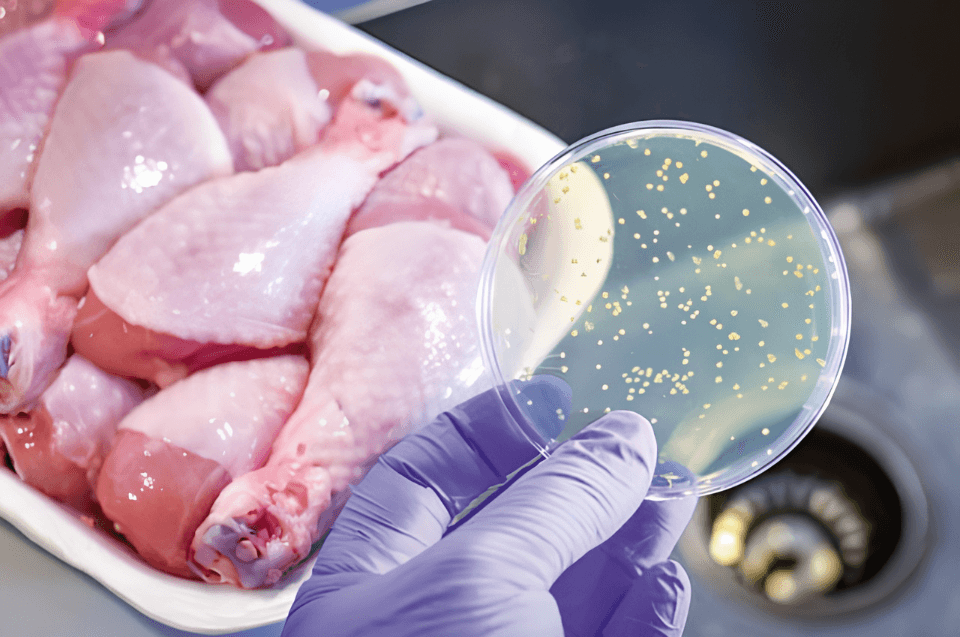
A common example is cutting raw chicken on a chopping board and then using the same unwashed board and knife to prepare salad.
Other examples include:
- Storing raw meat above ready-to-eat foods in the refrigerator.
- Placing cooked meat on the same plate that previously held raw meat.
- Failing to wash hands after handling raw eggs, meat, or poultry.
- Using a contaminated cloth or sponge to wipe kitchen surfaces.
- Allowing leaking packages of raw meat to touch other foods.
Ready-to-eat foods, such as salads, will not be cooked before eating, so bacteria transferred to them may reach the body directly.
Keeping raw food separate from cooked and ready-to-eat food is one of the most important prevention measures.
How long does it take for symptoms to appear?
Symptoms usually begin after an incubation period.
This interval varies depending on the amount of bacteria swallowed, the specific strain, and the person’s health.
In general, symptoms may begin within several hours to several days after exposure.
For this reason, the last meal a person ate is not always the source of infection.
Exposure may have occurred during an earlier meal, which can make it difficult to identify the responsible food.
During an outbreak investigation, information about recent meals, restaurants, travel, animal contact, and other people with similar symptoms can be useful.
Main symptoms of salmonellosis
Non-typhoidal salmonellosis usually causes gastrointestinal symptoms.
Common symptoms include:
- Diarrhea.
- Abdominal cramps or pain.
- Fever.
- Nausea.
- Vomiting.
- Loss of appetite.
- Headache.
- Weakness.
- Chills.
- General malaise.
Diarrhea may be watery and, in some cases, may contain mucus or blood.
Symptoms commonly last several days, although recovery may take longer in people with significant dehydration or underlying health problems.
Not everyone exposed to Salmonella develops noticeable symptoms.
Some people have a mild illness, while others develop severe symptoms requiring hospital treatment.
Important: bloody diarrhea, high fever, severe abdominal pain, or signs of dehydration should be evaluated by a healthcare professional.
Who is at greater risk of complications?
Most otherwise healthy people recover with hydration and supportive care.
However, some groups have a higher risk of severe or invasive infection.
These groups include:
- Infants and young children.
- Older adults.
- Pregnant people.
- People with weakened immune systems.
- People receiving cancer treatment.
- People taking immunosuppressive medication.
- People with advanced HIV.
- People with certain blood disorders.
- People with serious chronic illnesses.
- People with significant stomach or intestinal conditions.
In these groups, the bacteria are more likely to spread beyond the intestines and enter the bloodstream.
Medical evaluation may therefore be appropriate even when symptoms initially appear moderate.
Warning signs and when to seek medical care
Seek medical care if there is:
- Severe or very frequent diarrhea.
- Blood in the stool.
- High or persistent fever.
- Severe or worsening abdominal pain.
- Persistent vomiting.
- Inability to keep fluids down.
- Signs of dehydration.
- Confusion.
- Severe weakness.
- Fainting or significant dizziness.
- Rapid worsening of general condition.
- Symptoms in an infant, older adult, pregnant person, or immunocompromised person.
- Diarrhea that does not improve or worsens over time.
Signs of dehydration
Signs of dehydration may include:
- Dry mouth.
- Intense thirst.
- Dark urine.
- Reduced urination.
- Dizziness when standing.
- Sunken eyes.
- Sleepiness or irritability.
- Crying without tears in young children.
- A sunken fontanelle in infants.
Important: severe dehydration can cause low blood pressure, kidney problems, and the need for intravenous fluids.
Diagnosis and tests
Diagnosis begins with an assessment of symptoms, recent food intake, travel history, contact with sick people, and animal exposure.
Tests may not be necessary in mild cases.
When symptoms are severe, persistent, or occur in someone at higher risk, a clinician may recommend additional testing.
Stool testing
A stool culture can identify the bacteria causing the infection.
Molecular stool tests can also detect genetic material from Salmonella and other infectious organisms.
Testing may be particularly useful when:
- There is blood in the stool.
- Fever is high or persistent.
- The illness is severe.
- An outbreak is suspected.
- The patient belongs to a higher-risk group.
- Other intestinal infections need to be considered.
Blood tests
Blood tests may be used to evaluate:
- Dehydration.
- Kidney function.
- Electrolyte levels.
- Signs of inflammation.
- Possible spread of bacteria into the bloodstream.
Blood cultures may be requested if bacteremia or invasive infection is suspected.
Treatment of salmonellosis
Most mild cases of non-typhoidal salmonellosis are treated with hydration, food as tolerated, rest, and symptom monitoring.
The immune system usually clears the infection without specific antimicrobial treatment.
Main measures include:
- Drink small amounts of fluid frequently.
- Use oral rehydration solution when needed.
- Rest.
- Eat light foods as tolerated.
- Monitor for signs of dehydration.
- Seek medical care if symptoms worsen.
People with moderate or severe dehydration may need intravenous fluids.
Medication for fever, pain, or nausea may be used when recommended by a healthcare professional.
Antidiarrheal medication should not be used routinely, particularly when there is high fever, bloody stool, or concern for invasive bacterial infection.
Important: do not take antibiotics or antidiarrheal medication without medical advice. Treatment depends on severity, age, risk factors, and the likely cause of diarrhea.
Does every case need antibiotics?
No.
Most otherwise healthy people with uncomplicated intestinal salmonellosis do not need antibiotics.
In some cases, antibiotics may prolong the period during which bacteria are shed in stool and may contribute to antimicrobial resistance.
Antibiotics may be recommended when there is:
- Severe infection.
- Bacteria in the bloodstream.
- Infection outside the intestines.
- Immunosuppression.
- Very young or advanced age, depending on clinical assessment.
- Medical conditions that increase the risk of complications.
- Suspected typhoid or paratyphoid fever.
The choice of antibiotic depends on the type of infection, patient characteristics, local resistance patterns, and travel history.
When available, culture and antimicrobial susceptibility testing can help guide treatment.
Food and hydration during recovery
The main priority during salmonellosis is preventing dehydration.
Water, oral rehydration solution, clear soups, and other fluids can help replace losses.
During recovery, light and easy-to-digest foods may be chosen according to tolerance.
Possible options include:
- Rice.
- Potatoes.
- Plain pasta.
- Bread or toast.
- Bananas.
- Cooked apples.
- Soups.
- Thoroughly cooked lean meat.
Fatty foods, alcohol, excess caffeine, and heavy meals may worsen nausea or diarrhea in some people.
Milk and dairy products may temporarily cause discomfort after an intestinal infection because of short-term lactose intolerance.
Highly restrictive diets are usually unnecessary for long periods.
Normal eating can be resumed gradually as symptoms improve.
Possible complications
Salmonellosis usually resolves without lasting effects, but complications can occur.
Possible complications include:
- Dehydration.
- Abnormal sodium, potassium, or other electrolyte levels.
- Kidney injury related to dehydration.
- Bacteremia, when bacteria enter the bloodstream.
- Sepsis.
- Infection of bones, joints, heart structures, blood vessels, or other organs.
- Reactive arthritis after infection.
- Need for hospitalization.
Reactive arthritis
Some people develop joint pain and inflammation after the intestinal infection has improved.
This condition is called reactive arthritis.
It may also be associated with eye symptoms or urinary tract symptoms.
Not every episode of joint pain after diarrhea is reactive arthritis, but persistent symptoms should be evaluated.
Invasive infection
When Salmonella spreads beyond the intestines and reaches the bloodstream, it may infect other parts of the body.
This is more common in people with risk factors and usually requires hospital treatment with antibiotics.
Important: persistent fever, severe chills, confusion, low blood pressure, or worsening after an apparent improvement may indicate a more serious infection.
Are salmonellosis and typhoid fever the same disease?
No.
Although both are caused by bacteria from the genus Salmonella, they are clinically and epidemiologically different diseases.
Non-typhoidal salmonellosis
Non-typhoidal salmonellosis usually causes gastroenteritis.
It is commonly associated with contaminated food and contact with animals.
Typical symptoms include:
- Diarrhea.
- Abdominal cramps.
- Fever.
- Nausea.
- Vomiting.
Most otherwise healthy people recover with hydration and supportive care.
Typhoid fever
Typhoid fever is mainly caused by Salmonella enterica serovar Typhi, commonly called Salmonella Typhi.
Paratyphoid fever is caused by related organisms known as Salmonella Paratyphi.
These bacteria are adapted to humans and spread through food or water contaminated with feces from an infected person or carrier.
Typhoid fever is more common in settings where access to safe water, sanitation, and food hygiene is limited. It is also an important consideration for international travelers visiting areas where the disease remains endemic.
Typhoid fever may cause:
- Prolonged fever.
- Severe weakness.
- Abdominal pain.
- Headache.
- Constipation or diarrhea.
- Loss of appetite.
- Enlargement of the liver or spleen in some cases.
- Intestinal and systemic complications.
It is a systemic infection and generally requires antibiotic treatment.
Vaccines against typhoid fever are available and may be recommended for some travelers, depending on destination, length of stay, activities, and local public health guidance.
Important: typhoid fever is not simply a more severe version of common foodborne salmonellosis. It is a distinct disease with different transmission patterns, clinical progression, prevention strategies, and treatment needs.
How to prevent Salmonella infection
Prevention depends mainly on hand hygiene, safe cooking, avoiding cross-contamination, and proper food storage.
Wash your hands
Wash hands thoroughly with soap and water:
- Before preparing food.
- Before eating.
- After using the bathroom.
- After changing diapers.
- After handling raw meat, poultry, or eggs.
- After touching animals, cages, aquariums, terrariums, bedding, or animal waste.
Cook food thoroughly
- Cook poultry and meat to a safe internal temperature.
- Avoid raw or undercooked eggs, especially in higher-risk groups.
- Use pasteurized eggs in recipes that will not be fully cooked.
- Reheat leftovers thoroughly.
- Use a food thermometer when possible.
Avoid unpasteurized products
Choose pasteurized milk, dairy products, juices, and egg products.
Pasteurization reduces the risk of Salmonella and other foodborne pathogens.
Prevent cross-contamination
- Keep raw food separate from cooked and ready-to-eat food.
- Use separate cutting boards or clean them thoroughly between uses.
- Do not place cooked food on a plate that held raw meat.
- Clean knives, kitchen counters, utensils, and sinks properly.
- Store raw meat in sealed containers on the bottom shelf of the refrigerator.
Refrigerate food safely
- Do not leave perishable food at room temperature for prolonged periods.
- Refrigerate leftovers promptly.
- Keep the refrigerator at a safe temperature.
- Thaw food in the refrigerator, microwave, or during cooking, not on the counter for several hours.
Handle animals carefully
Reptiles, amphibians, birds, poultry, and other animals may carry Salmonella without appearing sick.
After contact:
- Wash hands thoroughly.
- Keep animals away from food preparation areas.
- Do not clean aquariums, terrariums, cages, or animal bowls in the kitchen sink.
- Supervise young children during animal contact.
- Do not allow higher-risk individuals to kiss animals or bring them close to the face.
Myths and facts
“Salmonella is only found in eggs.”
Myth.
“Raw or undercooked poultry can transmit Salmonella.”
Fact.
“Contaminated food always smells or tastes bad.”
Myth.
“Salmonellosis can cause dehydration.”
Fact.
“Every case of salmonellosis needs antibiotics.”
Myth.
“Infants, older adults, and immunocompromised people have a greater risk of complications.”
Fact.
“Handwashing and preventing cross-contamination can reduce infection risk.”
Fact.
“Typhoid fever and foodborne salmonellosis are exactly the same disease.”
Myth.
“Animals can carry Salmonella without showing symptoms.”
Fact.
Quick FAQ
Is Salmonella food poisoning?
The term “food poisoning” is commonly used, but salmonellosis is technically a foodborne infection because illness occurs after live bacteria are swallowed.
How long does salmonellosis last?
Many cases improve within several days. Duration varies depending on severity, age, hydration, and underlying health.
Can Salmonella infection be cured?
Yes. Most people recover completely. Severe or invasive cases may require hospitalization and antibiotics.
Can Salmonella spread from person to person?
Yes. Fecal-oral transmission can occur when hand hygiene is inadequate, particularly during food preparation, diaper changing, or care of an infected person.
Can soft-cooked or runny eggs transmit Salmonella?
There may be a risk if the egg is contaminated. People at higher risk should avoid raw or undercooked eggs and use pasteurized eggs in uncooked recipes.
Can I take antidiarrheal medication?
Not always. These medications may be inappropriate when there is high fever, blood in the stool, or concern for invasive bacterial infection. Medical guidance is recommended.
Do I need a stool test?
Not every case requires testing. It may be recommended for severe or persistent illness, bloody diarrhea, suspected outbreaks, or people at higher risk.
Does a previous Salmonella infection make someone immune?
Not necessarily. Many different strains exist, and reinfection can occur.
Can salmonellosis cause blood in the stool?
Yes. Bloody diarrhea is a warning sign and should be medically evaluated.
When should I seek urgent care?
Seek care for bloody stool, high fever, persistent vomiting, severe pain, confusion, fainting, signs of dehydration, or symptoms in someone at higher risk.
Important disclaimer
This content is for educational purposes only and does not replace professional medical evaluation. Severe diarrhea, blood in the stool, high fever, significant abdominal pain, persistent vomiting, inability to drink fluids, reduced urination, dizziness, fainting, confusion, or worsening general condition should be evaluated by a healthcare professional. Infants, older adults, pregnant people, immunocompromised individuals, and people with serious chronic conditions may have a higher risk of complications. Do not take antibiotics or antidiarrheal medication without medical advice.
References and further reading
- World Health Organization (WHO). Salmonella and foodborne diseases.
- Centers for Disease Control and Prevention (CDC). Salmonella: symptoms, transmission, treatment, and prevention.
- Centers for Disease Control and Prevention (CDC). Typhoid fever and paratyphoid fever.
- European Centre for Disease Prevention and Control (ECDC). Salmonellosis: facts, surveillance, and prevention.
- National Health Service (NHS). Food poisoning: causes, symptoms, and treatment.
- National Institute of Diabetes and Digestive and Kidney Diseases (NIDDK). Foodborne illness and acute diarrhea.
- Mayo Clinic. Salmonella infection: symptoms and causes.
- Cleveland Clinic. Salmonella: causes, symptoms, diagnosis, and treatment.
- Merck Manual Professional Version. Nontyphoidal Salmonella infections.
- U.S. Food and Drug Administration (FDA). Food safety guidance for preventing Salmonella infection.