
by Dr. Gabriel M. Freitas | 11/11/2025 | Autoimmune Diseases, Gastrointestinal Diseases
Content discussed in this post What celiac disease is Symptoms in children and adults Celiac disease, gluten sensitivity, and wheat allergy How diagnosis is made The role of biopsy and when it can be waived HLA-DQ2/DQ8: what it’s for Treatment: the gluten-free diet in...
by Dr. Gabriel M. Freitas | 08/29/2025 | Autoimmune Diseases, Gastrointestinal Diseases
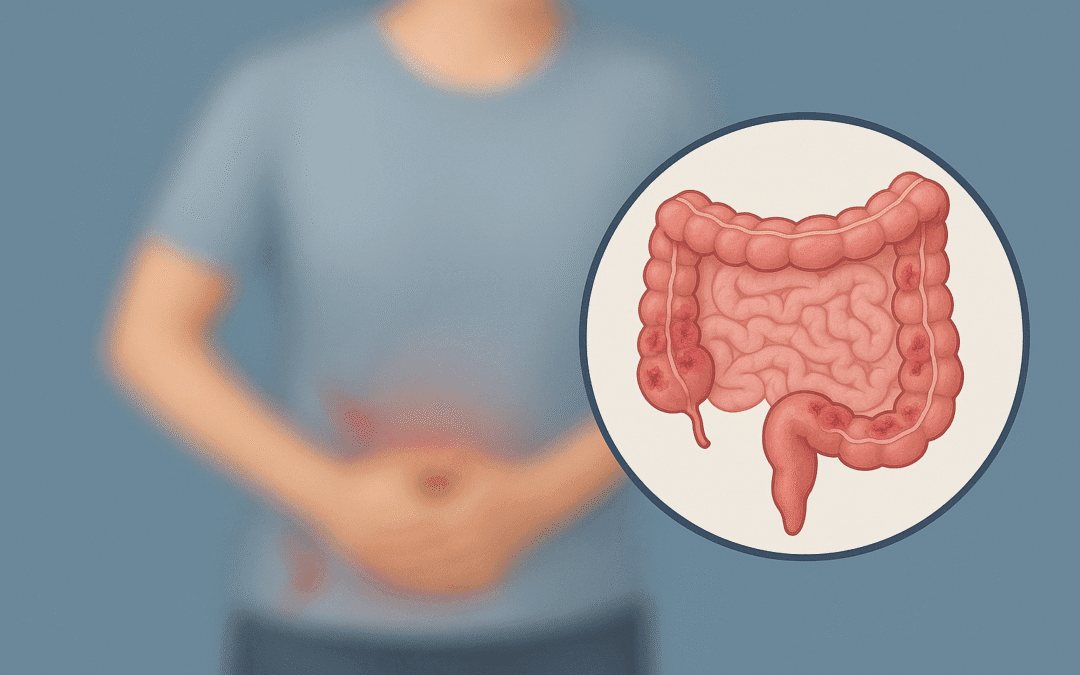
Ulcerative colitis is a chronic inflammatory bowel disease that primarily affects the colon (large intestine) and rectum. It is characterized by continuous inflammation and the formation of ulcers in the intestinal lining, causing symptoms that can range from mild to...

by Dr. Gabriel M. Freitas | 08/01/2025 | Autoimmune Diseases, Gastrointestinal Diseases
Crohn’s disease is a chronic inflammatory disorder of the gastrointestinal tract that can affect any part of the digestive system, from the mouth to the anus. However, it most commonly affects the end of the small intestine (ileum) and the beginning of the large...

by Dr. Gabriel M. Freitas | 07/14/2025 | Autoimmune Diseases
Myasthenia gravis is a rare autoimmune condition that can significantly affect a person’s quality of life. Its hallmark symptom is muscle weakness that worsens with physical activity and improves with rest. Although it is a chronic disease, advances in medicine...

by Dr. Gabriel Freitas | 05/29/2025 | Autoimmune Diseases
Multiple sclerosis (MS) is a chronic, autoimmune, and inflammatory disease that affects the central nervous system, especially the brain and spinal cord. It occurs when the immune system attacks the myelin sheath—a substance that coats and protects nerve...

by Dr. Gabriel Freitas | 05/26/2025 | Autoimmune Diseases
Scleroderma is a rare, chronic autoimmune disease characterized by the hardening and thickening of the skin. It may also affect internal organs. The name comes from the Greek words sclero (hard) and derma (skin), reflecting one of the condition’s most typical...